Reuven Agami on curiosity, serendipity and the dark proteome
Reuven Agami on curiosity, serendipity and the dark proteome
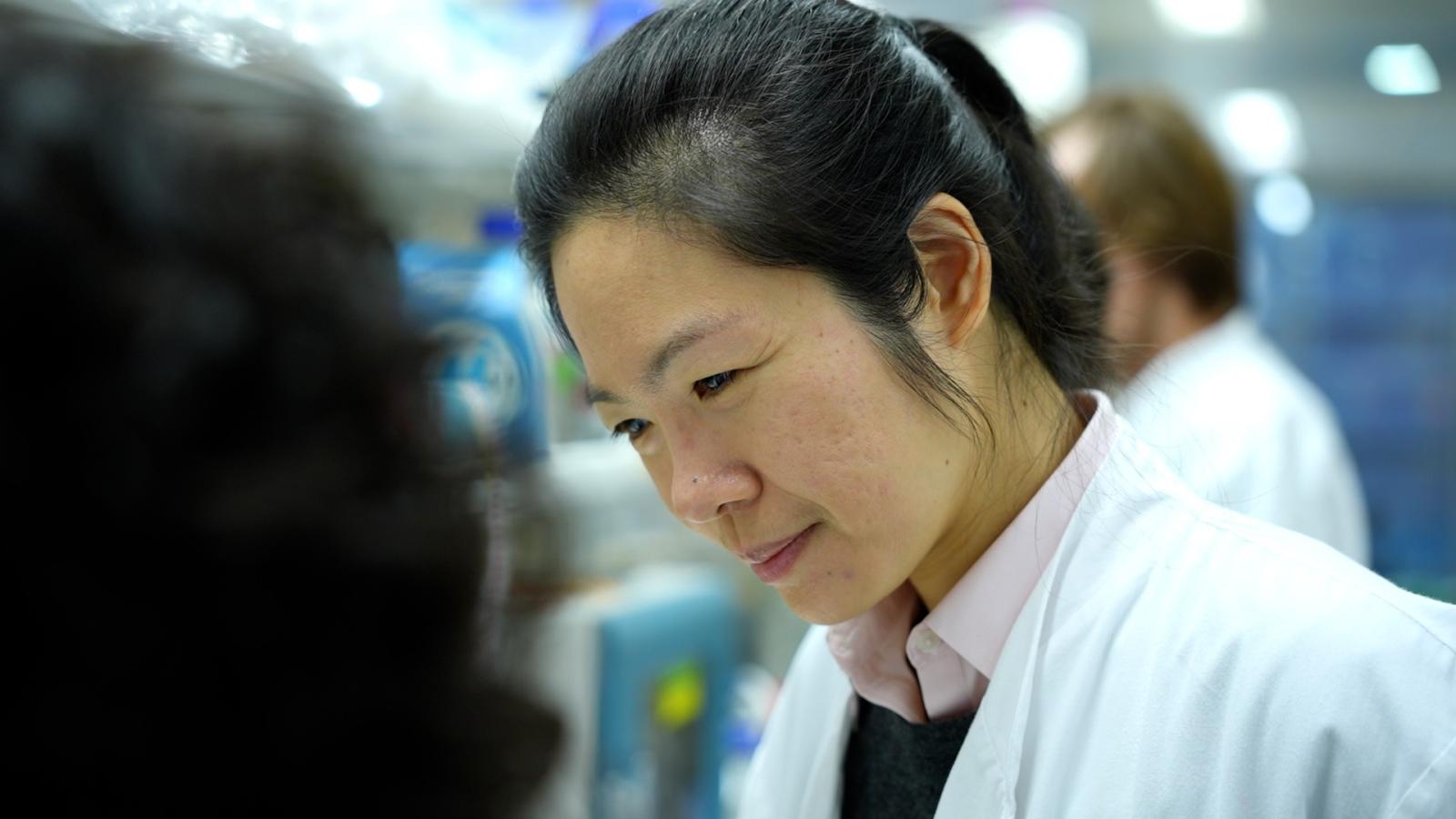
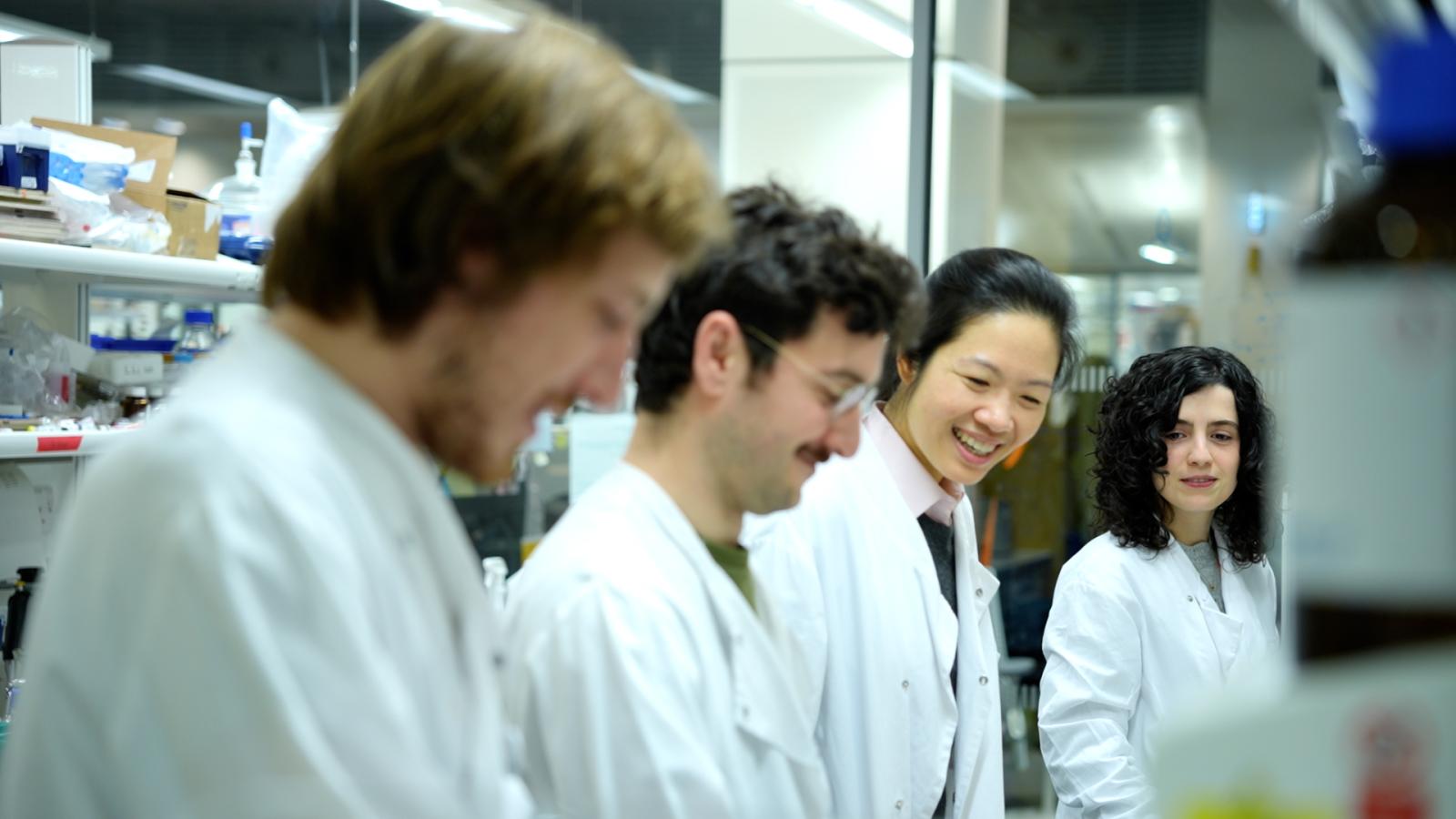
Leanne Li was told she was crazy for wanting to work on the role of the nervous system in cancer. A chance encounter encouraged her to take a chance and pursue her dream. Now a group leader at the Francis Crick Institute, she is one of our newest Cancer Grand Challenges Team Leads. Armed with up to $25m Leanne and team InteroCANCEption are taking on our cancer and the nervous system challenge.
Here, we talk to Leanne about her career so far, from medical studies in Taiwan, through multiple countries and ground-breaking labs, to that conversation with Sir Paul Nurse that changed everything.
Through Cancer Grand Challenges InteroCANCEption is funded by Cancer Research UK and the US National Cancer Institute.
Want to learn more about how team InteroCANCEption plans to uncover and understand the hidden dialogue between the brain and cancer? Read the plain language summary of the team’s approach.
That's a tough question for me! I’m from so many different places.... I’m originally from Taiwan and that’s where I did my medical studies. I then moved to Switzerland to do my PhD and after that, Boston to do a Post Doc. I moved back to Europe, to London, to start my own lab. Each of these places has had a huge impact on me.
I always thought that I would be a clinician — but I realised during med school that you always have to follow strict protocols. I wanted to explore a bit more freedom and so that’s how I got into biomedical research.
When I was finishing my medical studies in Taiwan anti-angiogenic therapy was in its prime. I saw how patients reacted to it and I became really interested in it. Back then we thought that it would be the cure for cancer.
My PhD supervisor, Doug Hanahan, played a crucial role in anti-angiogenic therapy research, so I went to his lab. In the end, I worked on something completely different, and coincidentally, ended up studying a classical neuronal signalling pathway in cancer. Doug introduced me to a more basic type of research, understanding the mechanisms of cancer progression using genetically engineered mouse models.
Originally, I didn’t propose to work on cancer neuroscience… people thought I was crazy — I was told that I would never get a job if I talked about these kinds of things! So, initially I proposed cancer biology research topics that were trendy back then.
When I interviewed at the Crick, before my chalk talk, I first had a short chat with the Director and Nobel Prize winner Paul Nurse. I think he got the sense I was more excited about basic cancer research than the translational projects listed in my proposal. I asked him, “What kind of person do you want to recruit?”
I was thinking about topics, but he replied, “We want to recruit people who are working on truly fascinating things, who are not following the waves but creating the waves.”
Later, I was waiting outside the room, ready to talk about my three “safe” projects which I thought people would be interested in, and Paul came out, five minutes before the talk. He said, “Change of plan. I want you to pitch only one project that you truly believe in.”
So, I took a chance. Completely unprepared I proposed to study the interaction between cancer and the nervous system. The panel questioned me for over an hour about how I would study that, it was quite scary. But they offered me the position!
This experience was very liberating for me, and taught me to focus on the things that you truly believe in. At the Crick, the evaluation system also means you can really have a longer vision for your science — some things can’t be rushed.
In a way, I spent five years preparing for the Cancer Grand Challenge, thanks to the Crick!
As cancer biologists, we have looked at almost everything you can think of in the body, the immune system, fibroblasts, blood vessels, but there is something missing — the nervous system.
The nervous system governs almost everything that we do: how we breathe, how we talk, how we think, how we feel hungry, how we want to run away from threats. It is so important in coordinating all these physiological or pathological responses, but we don’t really know much about how the nervous system and cancer interact. We want to change that! We think the nervous system is important in detecting that something is going wrong in your body, and we hope to understand and harness this interplay against cancer.
Learn more about team InteroCANCEption, including a plain language summary of the team’s approach.
Discover all five new teams and how they were selected.
Find the whole series on our news page: The stories behind the science.
Edited by Rebecca Eccles
Reuven Agami on curiosity, serendipity and the dark proteome
Bart Vanhaesebroeck on thinking differently about killing cancer cells
Ludmil Alexandrov on leaving a lasting mark on cancer prevention