Ludmil Alexandrov on leaving a lasting mark on cancer prevention
Ludmil Alexandrov on leaving a lasting mark on cancer prevention
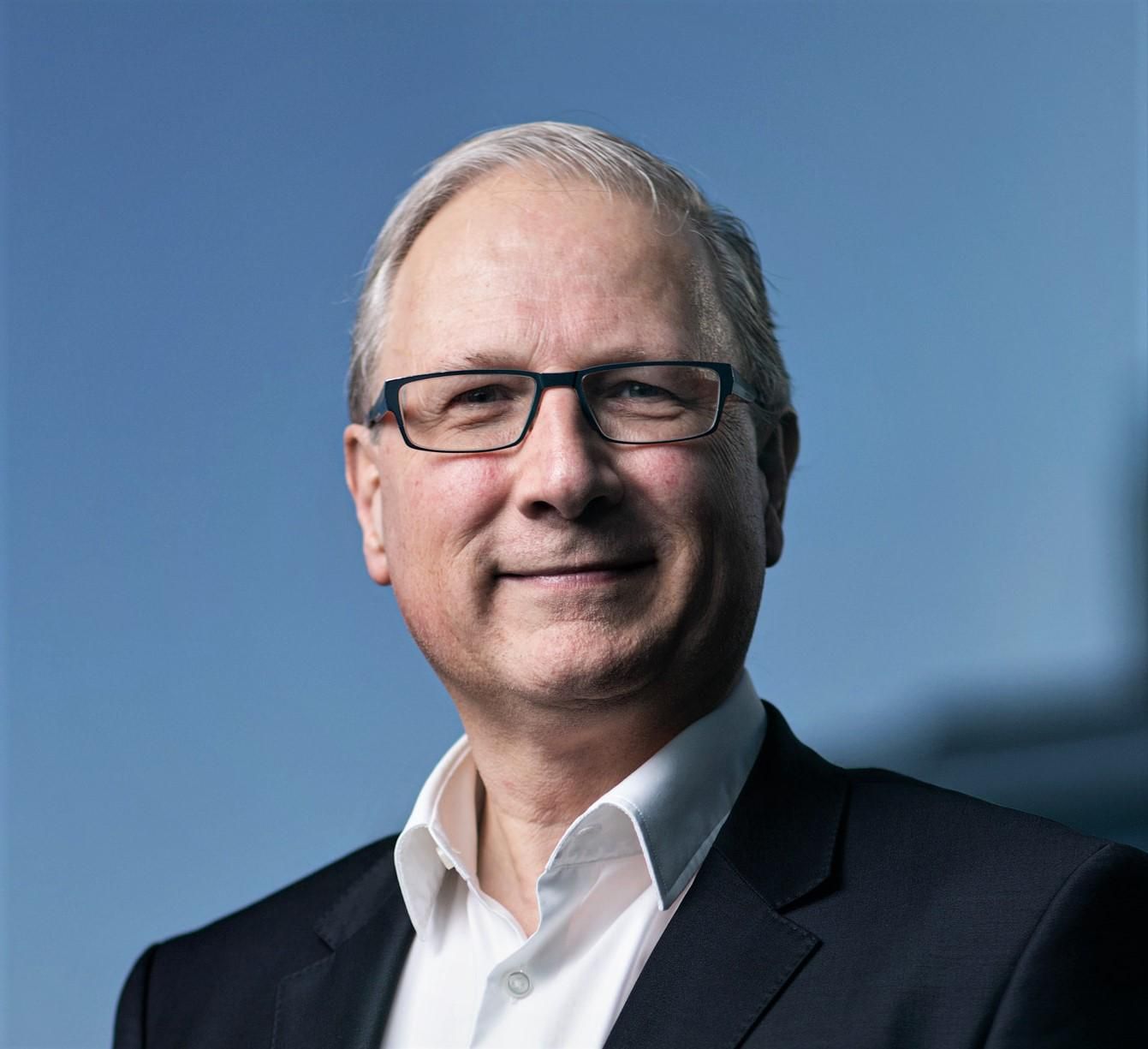
Bart Vanhaesebroeck likens killing cancer cells to popping balloons - rather than trying to remove the air, he proposes we need to add a little more air, to pop them for good. Armed with up to $25m of Cancer Grand Challenges funding, Bart and team REWIRE-CAN plan to test this unconventional approach, focusing on colorectal cancer, in the hopes of transforming therapeutic approaches.
Here, we talk to Bart about his career, from Ghent in Belgium and the beginnings of biotech, to cloning genes in London, and the inspiration behind the hyperlethality approach. We also discuss the importance of communicating bold ideas carefully, especially when patients and families are listening.
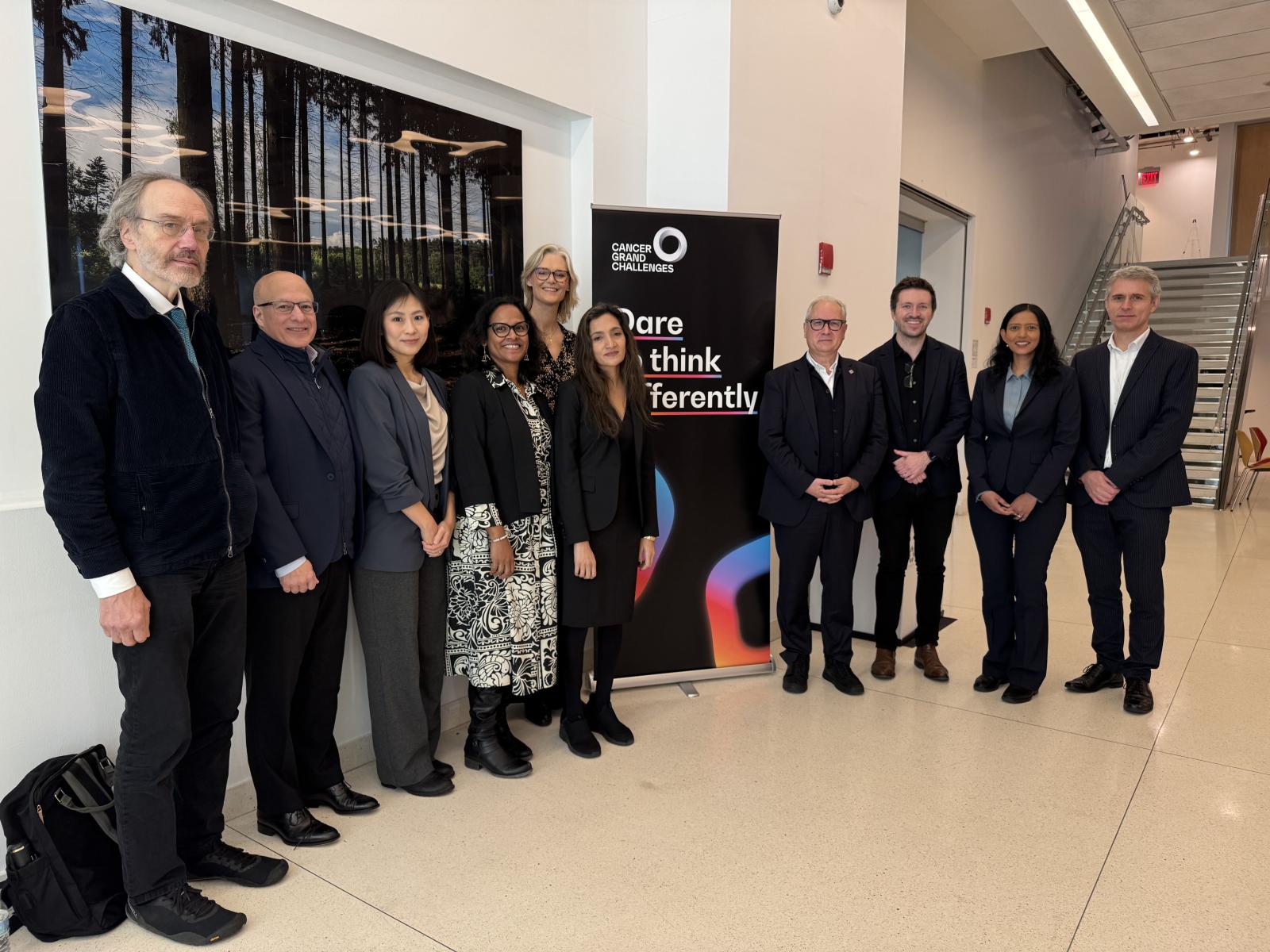
Through Cancer Grand Challenges, REWIRE-CAN is funded by Cancer Research UK, the National Cancer Institute, the Bowelbabe Fund for Cancer Research UK and Yosemite (oncology-focused venture firm).
Want to learn more about how REWIRE-CAN plan to rewire cancer cells? Read the plain language summary of the team’s approach.
I grew up in Belgium, in a village of fewer than 600 people, where there were only four other children my age. It was a very rural upbringing, with our house right next to a river. We were always outside, and it felt like anything was possible. From an early age, I was fascinated by nature, which inspired me to study biology.
I went to university in Ghent. At the time, biology research was undergoing a transformation, and molecular biology was emerging as a new discipline. I found myself in Walter Fiers’ lab, which was then at the forefront of recombinant DNA technology in Europe, cloning genes to produce proteins like insulin and cytokines that could potentially treat human disease. It was an incredibly exciting time. Coming from a place where very little seemed to happen, I suddenly felt as though I was at the centre of a scientific revolution.
It was also the dawn of the biotech era, with pioneering companies such as Genentech in San Francisco and Biogen in Geneva aiming to transform scientific discoveries into medicines. We're talking about 1985, when dinosaurs practically still roamed the earth! BioGen also established a subsidiary in Ghent called BioGhent. The rapid growth of this new sector, with BioGhent and other local spinouts from the Fiers lab, also meant that many staff from Walter’s academic lab left for careers in the fledgling Biotech industry. As a consequence, we learned to work independently from an early stage during our PhD. I always very much appreciated this independence.
I was initially trained in immunology, exploring the biology of the immune cytokine interleukin-2 that the Fiers’ lab had cloned, and published my first paper in that field. But then Walter asked me to switch focus to their newly-cloned tumour-necrosis factor (TNF) which could directly kill cancer cells. I was tasked to find out why some tumour cells were sensitive while others were resistant. This was an incredibly exciting time where everything remained to be discovered, we did not know anything about TNF signalling and biology at the time! In the end, the project was highly successful, and I published seven first-author papers based on my PhD work.
Before establishing my own team, I trained in four different laboratories, always working directly for the Director. As a result, I enjoyed a great deal of independence, with relatively little direct supervision. At the same time, there were always good resources, scientific excitement and lots of possibilities to pursue. I have always sought to replicate that kind of environment in my own lab.
Working in different labs in different countries - as well as the UK and Belgium, I also spent some time in Italy - has definitely influenced my approach. One observation that stayed with me was that the most successful lab head I worked with was the one who invested most time in creating effective networks. His office was always full of people, and he seemed to spend much of his day talking to colleagues and collaborators. At the time, I thought this was a distraction from science. In hindsight, I realise it was one of the keys to his success: when an opportunity arose or a problem needed solving, he could immediately call the right people and bring together an effective team.
In my own lab, I have tried to incorporate some of the above learnings. I chose not to make the group too large and take ample time for discussion. I also try to give people the freedom to do the experiments they want, within reason, and give them the freedom to explore. An important realisation is that everybody is different and tackles questions in different ways. It is also important for students and postdoctoral researchers to understand that it is their PhD or Post Doc, not mine. They need to be given time, resources and confidence to find their own path, while taking ownership of their work.
My PhD research focused on uncovering the biology of newly cloned genes such as interleukin-2 and TNF but I was a little frustrated that I had not cloned a gene myself. That opportunity came when I moved to London to work with Michael (Mike) Waterfield whose group had just cloned the first genes of the PI 3-kinase (PI3K) family of enzymes. This provided me with the opportunity to clone the gene for PI3Kδ, a signalling kinase predominantly expressed in white blood cells. PI3Kδ turned out to play a central role in immunity and haematological malignancies, and inhibitors targeting this enzyme are now approved for the treatment of certain B-cell cancers. I still work on PI3Kδ 30 years later, now focusing on the exciting potential of PI3Kδ inhibitors to paradoxically stimulate the immune system, which is currently being explored in human cancer immunotherapy trials!
I was involved in one of the first spin-out companies focused on PI3K inhibitors, co-founded by Mike. PI3K inhibitors are now known to inhibit cancer cell proliferation but not to kill the cells. Mike asked a postdoc in the lab to generate cells with elevated PI3K, as a screening system for PI3K inhibitors, but he never managed to create such cells.
I revisited this question several times over the years, but it never worked. Then over a decade ago, using models in which we could induce PI3K at will, we observed that cells died when they had more PI3K. It was one of those moments that forces you to rethink your assumptions. I remember thinking then that rather than inhibiting PI3K to treat cancer, a more powerful approach would be to generate PI3K activators, but these did not exist…
I have been pursuing the idea of PI3K activation ever since. Together with Roger Williams (REWIRE-CAN Team Member) and AstraZeneca in the UK, we developed the first direct PI3K activator and first demonstrated the therapeutic potential of the approach in cardioprotection and neurodegeneration. When the Cancer Grand Challenges initiative launched its rewiring cancer cells challenge, we immediately thought our approach would fit the bill.
My wife is not a scientist, and when I introduced the concept to her, I used this analogy: Imagine a cancer cell as a balloon full of air. Traditional treatments try to squeeze the air out, but the ballon can always re-inflate. What happens if you put just a little bit more air in? The balloon pops. Of course, biology is much more complicated than that, but she immediately grasped the principle. The she asked a question that has stayed with me ever since: “Why has this not been tried before?”
Of course, activating cancer cells raises concerns about possible cancer promotion. Over the years, it was interesting for me to learn that patients often see risk differently from scientists. Provided new drugs are tolerable, supported by good science and careful testing, patients may be willing to consider approaches that seem unconventional, especially when other treatment options are exhausted.
Careful and clear communication about these new approaches is incredibly important. We must remember that we are still testing hypotheses and should not overstate the evidence. As scientists, we have a responsibility to be honest about what we know, what we don't know, and how much work remains to be done. Hyperlethality is an exciting concept, with promising early data. The critical step is to establish whether it can be translated into a meaningful therapeutic strategy. That is precisely the goal of Cancer Grand Challenges team REWIRE-CAN.
There is clearly a need for additional anti-cancer drugs. Hyperlethality can be viewed as a form of cellular rewiring, a concept that clinicians are familiar with. A key point is that drug-induced activation of an oncogenic pathway is fundamentally different from a cancer-causing mutation that keeps the pathway permanently switched on. Indeed, our envisaged clinical strategy involves intermittent dosing of activating drugs, allowing signalling pathways to remain subject to their normal regulatory and downregulatory mechanisms rather than being permanently switched on. From our initial experiments assessing the effects of our activators on normal tissues, I have been surprised by how little impact they appear to have. However, this observation will need to be confirmed through more detailed analyses.
I hope we will create momentum for this new approach. At a minimum, REWIRE-CAN will deliver powerful research tools, allowing to address fundamental questions in cancer biology, but also in normal physiology and a range of other diseases. Ultimately, we hope that rewiring-based approaches will expand the therapeutic arsenal against cancer and provide new ways to overcome resistance to existing therapies. Our ambition is that our work results in at least one rewiring drug entering human clinical trials.
Learn more about team REWIRE-CAN, including a plain language summary of the team’s approach.
Discover all five new teams and how they were selected.
Find the whole series on our news page: The stories behind the science.
Edited by Rebecca Eccles
Ludmil Alexandrov on leaving a lasting mark on cancer prevention
Paul Bastard on looking at cancer through the lens of autoimmunity
Leanne Li on scientific liberation and creating scientific waves