
REWIRE-CAN
Led by Bart Vanhaesebroeck, University College LondonThe challenge
REWIRE-CAN is tackling the rewiring cancer cells challenge. The team is taking a different approach to cancer therapy, developing precise signalling modulators to disrupt cancer cells finely tuned ‘Goldilocks’ state, rewiring them to self-destruct. In doing so, REWIRE-CAN aims to transform therapeutic approaches and patient outcomes in colorectal cancer.
At a glance
REWIRE-CAN is funded by



Team and leadership
REWIRE-CAN is led by:
Bart Vanhaesebroeck, University College London
The team brings together researchers and clinicians with world-leading expertise in colorectal cancer, cell signalling, modelling of patient heterogeneity and computational biology and extensive experience in translating basic research into drug development.
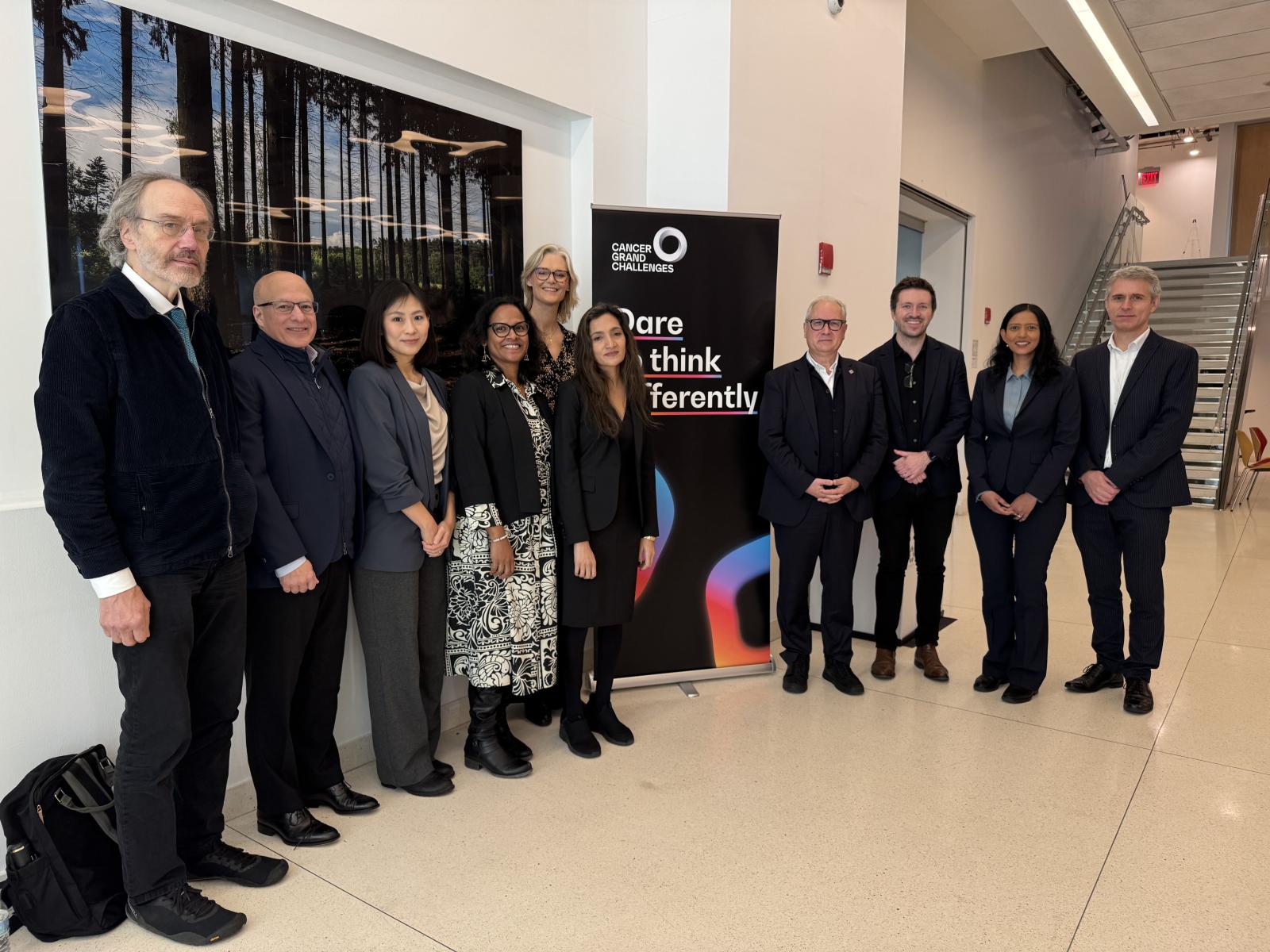
Tackling the rewiring cancer cells challenge
REWIRE-CAN plans to reprogramme cancer cells into vulnerable states by disrupting their finely tuned “Goldilocks” state. The team aims to exploit the observation that cancer cells depend on a finely balanced—not maximal—level of oncogenic signalling. Increasing evidence shows that when this signalling exceeds this critical “Goldilocks” threshold, stress pathways are triggered and cell proliferation is inhibited. By deliberately overactivating these oncogenic circuits, the team intends to drive cancer cells beyond their tolerated limit.
The team will come at this from three angles. Firstly, taking a somewhat counterintuitive approach the team will hyperactivate oncogenic signalling pathways to push cancer cells over the edge, leveraging the phenomena that cancer cells select for an optimal level of oncogenic signalling, rather than a maximal level. Second, the team will attempt to force slow-cycling treatment resistant cells into a sensitive state. And third, the team will attempt to create ‘bottlenecks’, that fix cells in a sensitive state, preventing them from further adaptation and subsequent resistance.
The team will focus on colorectal cancer, which is a signalling driven disease and the second most common cause of cancer death, with an alarming rise in incidence in young adults. REWIRE-CAN will utilise longitudinal patient samples, critically including a cohort of early-onset cases. The team will create organoids to develop a rewiring perturbation ‘phenoscape’ and use advanced CRISPR screening approaches to generate genome-wide hyperactivation maps. The team’s integrated approach will allow it to define combinatorial colorectal cancer signalling dependencies.
Taking advantage of recent pharmacological breakthroughs REWIRE-CAN will go on to develop small molecule activators and inhibitors, surface receptor modulators and novel rewiring agents. The team will then rigorously test promising therapeutic candidates in a pre-clinical setting, critically using models that reflect the heterogenous nature of colorectal cancer, with the hope to advance to clinical trials.
Looking ahead
Although controversial, the REWIRE-CAN team’s work has the potential to transform therapeutic approaches and patient outcomes in colorectal cancer. The team’s discoveries aim to provide a roadmap for therapeutic rewiring of cancer cells by signalling modulation across tumour types.

Plain language summary
Colorectal cancer is a leading cause of cancer-related death worldwide, and its incidence is alarmingly on the rise, especially in young adults. For patients with advanced disease, a major challenge is that cancer cells become resistant to treatments. Even when therapies initially work, the cancer often adapts, survives, and returns stronger than before. There is an urgent need for entirely new ways to treat this disease.
REWIRE-CAN has pinpointed a fundamental weakness in how colorectal cancer cells operate. Researchers discovered that cancer cells are not all the same and they can change identity, becoming sensitive to chemotherapy, or the opposite, highly resistant. Highly resistant cancer cells are often responsible for cancer spreading and coming back after treatment. Crucially, these identity switches are controlled by the cell's internal communication networks, known as "signalling pathways."
The REWIRE-CAN team’s approach centres on a key vulnerability of cancer cells. While they rely on highly active signalling pathways to grow, they must keep this activity within a perfect "Goldilocks" zone— not too high, not too low, but just right. Too much becomes toxic and kills the cell. It’s like how one cup of coffee can wake you up and allow you to focus on your work, whereas multiple cups might leave you feeling anxious and unable to concentrate.
While most current drugs try to block these signalling pathways, REWIRE-CAN will do the opposite, attacking this vulnerability with revolutionary strategies.
- First, through signalling hyperactivation, the team will use new drugs called "activators" to intentionally push the cancer's communication signals beyond their tolerated limit. By overloading the system, we can turn the cancer’s greatest strength into a fatal flaw, causing the cancer cells to self-destruct. This is like pushing hard on the accelerator, rather than the break, to push cancer cells over the edge.
- Second, using a strategy of cell-state rewiring, the team will use these new activators, sometimes combined with other drugs, to reprogramme treatment-resistant cancer cells. The goal is to force them from their tough, treatment-resistant identity back into a state that is once again sensitive to standard chemotherapy, making existing therapies effective again.
- Third, the team also plans to develop approaches that fix cancer cells in treatment-sensitive states, preventing them from switching identity again.
REWIRE-CAN plans to use precious patient samples taken over the course of disease progression and critically, include younger people with early-onset disease. The team will use cutting-edge lab models, including organoids- "mini-tumours" grown from patients' own cancer cells- to discover the best activator drugs and test thousands of different combinations with models to reflect the complex nature of colorectal cancer.
Crucially, a major focus will be ensuring this approach is safe for patients. The team will perform extensive pre-clinical studies to determine the right dose and to understand the effects of these drugs on healthy cells, not just cancer cells. This will allow REWIRE-CAN to create a clear roadmap for how to use these powerful rewiring strategies safely and effectively for different patients. REWIRE-CAN hopes to advance from pre-clinical models to clinical trials.
By rewiring cancer cells to their disadvantage, REWIRE-CAN aims to develop much-needed new therapies for patients with advanced colorectal cancer, creating a new path to overcome treatment resistance and transform patient outcomes. The team’s work will not only benefit people with colorectal cancer but will also serve as a model for applying this innovative approach to other types of cancer.