Leanne Li on scientific liberation and creating scientific waves
Leanne Li on scientific liberation and creating scientific waves
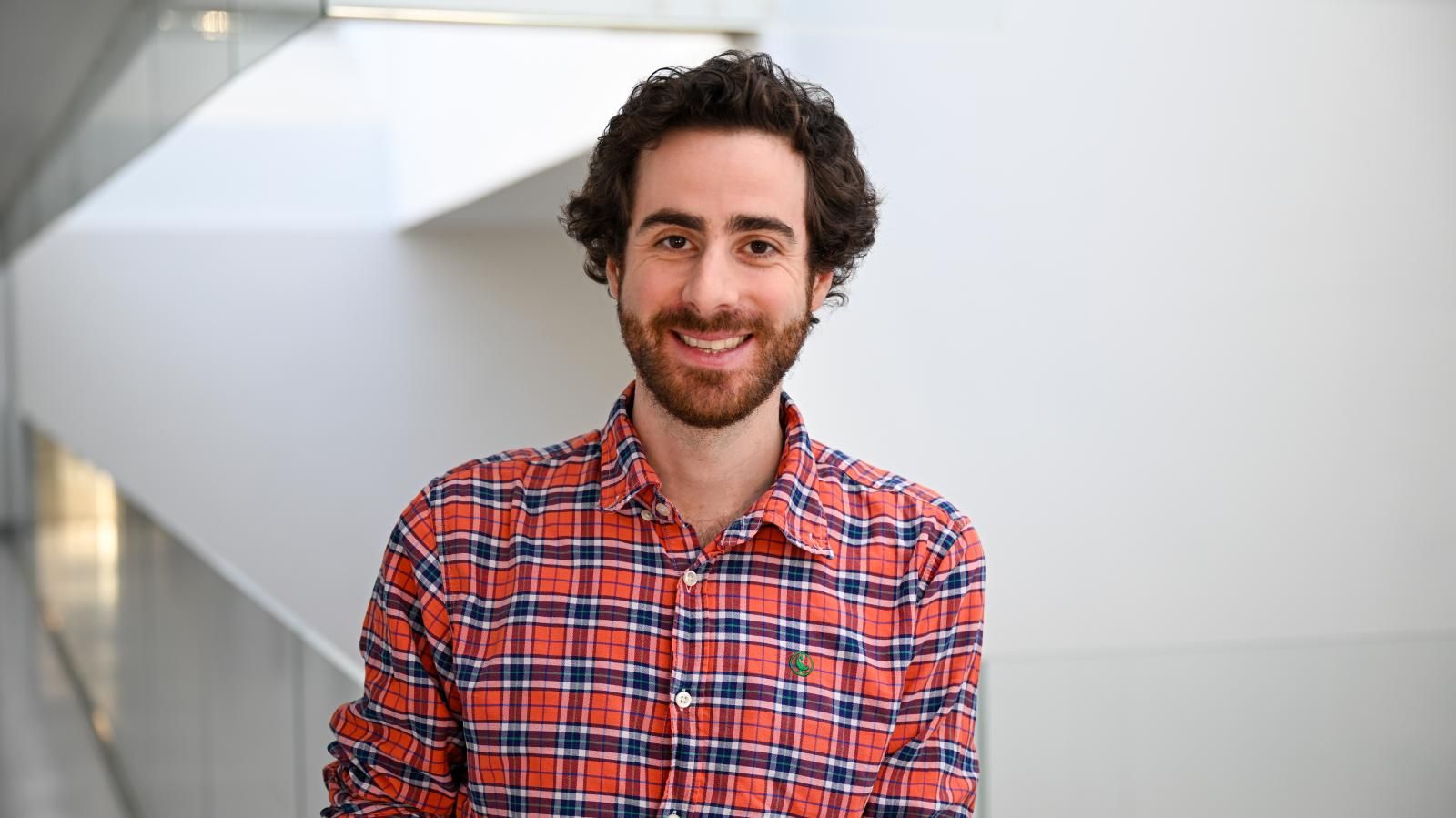
Paul Bastard sent an email at 19 that shaped the course of his career. Now a paediatric immunologist, during his research training he uncovered that some deleterious autoantibodies can cause severe COVID-19 disease. Paul is now leading team ATLAS in tackling our cancer avoidance challenge through the lens of autoantibodies. By bringing their thinking to the oncology space, the team’s work could have impact at every stage of cancer and be game-changing for cancer prevention.
We talk to Paul about that email, go behind the scenes of those COVID findings and discuss how they changed the way he thinks about scientific discovery and crazy ideas.
Through Cancer Grand Challenges ATLAS is funded by Cancer Research UK, the Breast Cancer Research Foundation, the Susan Wojcicki Foundation, and the Torrey Coast Foundation
Wondering what an autoantibody is? Find out more in the plain language summary of team ATLAS’s approach.
When I was 19, in between my medical studies in Paris, I did a summer internship in New York at Rockefeller University. That really began my whole interest in the field I'm in now.
I emailed immunologist Jean-Laurent Casanova [an ATLAS team member, now working at UTSW] explaining that I was a medical student, that I was fascinated by his work, and asking whether I could do a summer internship. That's how it started. Over 10 years later, after my medical studies and three years of residency in paediatrics, I came back to the Casanova lab in New York, to do my Master’s. I loved it. So, then I did my PhD in Jean-Laurent’s lab, this time in Paris, working on genetic factors underlying infection.
In medicine we know what's happening to the patient, but often we don't know why it’s happening. We obviously try to find out, but we are not always able to. Studying the genetic and immunological contribution to infectious diseases felt like a new way to try to understand why things were happening and why people were dying and getting sick.
Then when I was doing my PhD, COVID-19 arrived. Early on, I found that autoantibodies against type I interferons cause severe COVID-19 in at least 15% of cases. That's what made me go from purely genetics to autoantibodies in infectious diseases.
The first moment I remember very well was when we read the initial ELISA plate. It was actually at night because it was a strange time during COVID. Anne Puel and Emmanuelle Jouanguy were also in the lab and they had done this experiment for other topics before. They were with me when we revealed the ELISA plate and saw many positives— autoantibodies in the patients with critical disease. It was hard to believe but it was actually true! It took a while to prove it, with many great collaborations worldwide— a very exciting period. It went from one small ELISA plate to testing over 30,000 healthy individuals with very precise functional assays.
For me, completely. I try to be as open-minded as possible and not disregard ideas that may seem crazy initially. Many of them won't turn out to be true, but every so often one does.
It can also be a very simple idea. The autoantibodies against type I interferons are very simple to detect. And they were true. I was lucky, but it can happen to anyone. If anyone on the ATLAS team brings a bold or unexpected idea to the table, they know I will listen.
One of our Co-Investigators, Tyler Hulett emailed Jean-Laurent and me because he had read a review we wrote for Nature Immunology. We had mentioned testing for autoantibodies in cancer and he thought we would be a good match. That started the whole application and we built the team from there.
When I chose my medical specialisation, I hesitated about whether to specialise in paediatric oncology or paediatric immunology, but decided that perhaps one day I could bridge both immunology and cancer. And here I am! I will continue to see patients in the hospital alongside our research, both roles and perspectives teach me a lot.
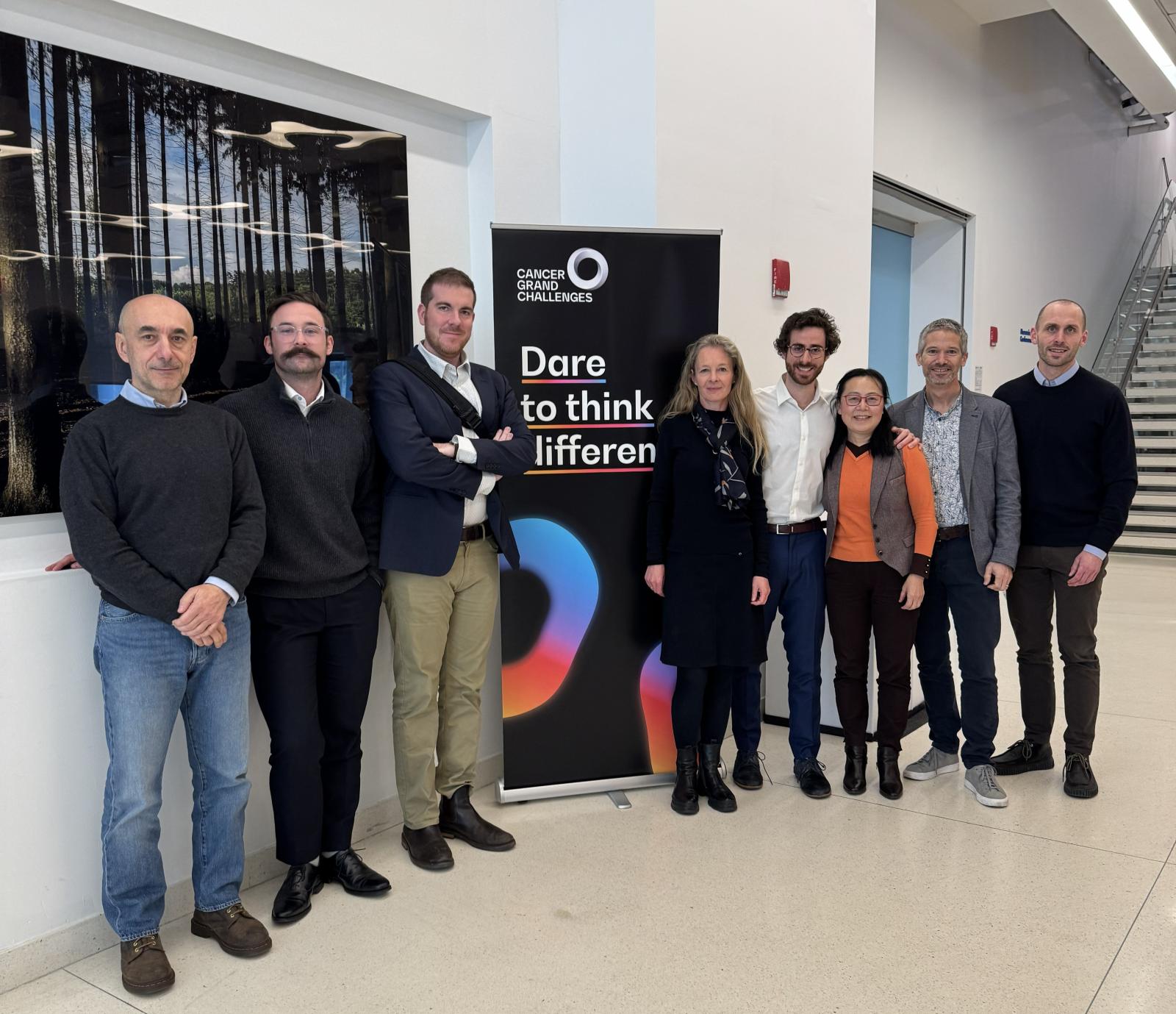
Most of us would never have worked together without Cancer Grand Challenges, immunologists, epidemiologists, ageing experts, cancer biologists and clinicians from six different countries. The seed funding allowed us to come together initially and now we all love to work together, nine labs across the world.
It's a high-risk project so it feels like a small revolution to see it's possible to do this and come together on such an important scale.
First of all, we hope to provide proof-of-concept that autoantibodies impact cancer risk. That itself would be quite a change in the way we understand cancer. Then for patients, our work could potentially have an impact at every stage of cancer. If we find antibodies that are a marker of cancer long before symptoms arrive, then we could intervene earlier. If we find detrimental antibodies that lead to cancer, we can change the way we treat cancer, introducing therapies that remove the bad antibodies in addition to standard treatments. And if we find protective antibodies in cancer avoiders, we could make them and give them to other people to prevent or help treat cancer.
Learn more about team ATLAS, including a plain language summary of the team’s approach.
Discover all five new teams and how they were selected.
Find the whole series on our news page: The stories behind the science.
Edited by Rebecca Eccles
Leanne Li on scientific liberation and creating scientific waves
Reuven Agami on curiosity, serendipity and the dark proteome
Bart Vanhaesebroeck on thinking differently about killing cancer cells