Leanne Li on scientific liberation and creating scientific waves
Leanne Li on scientific liberation and creating scientific waves

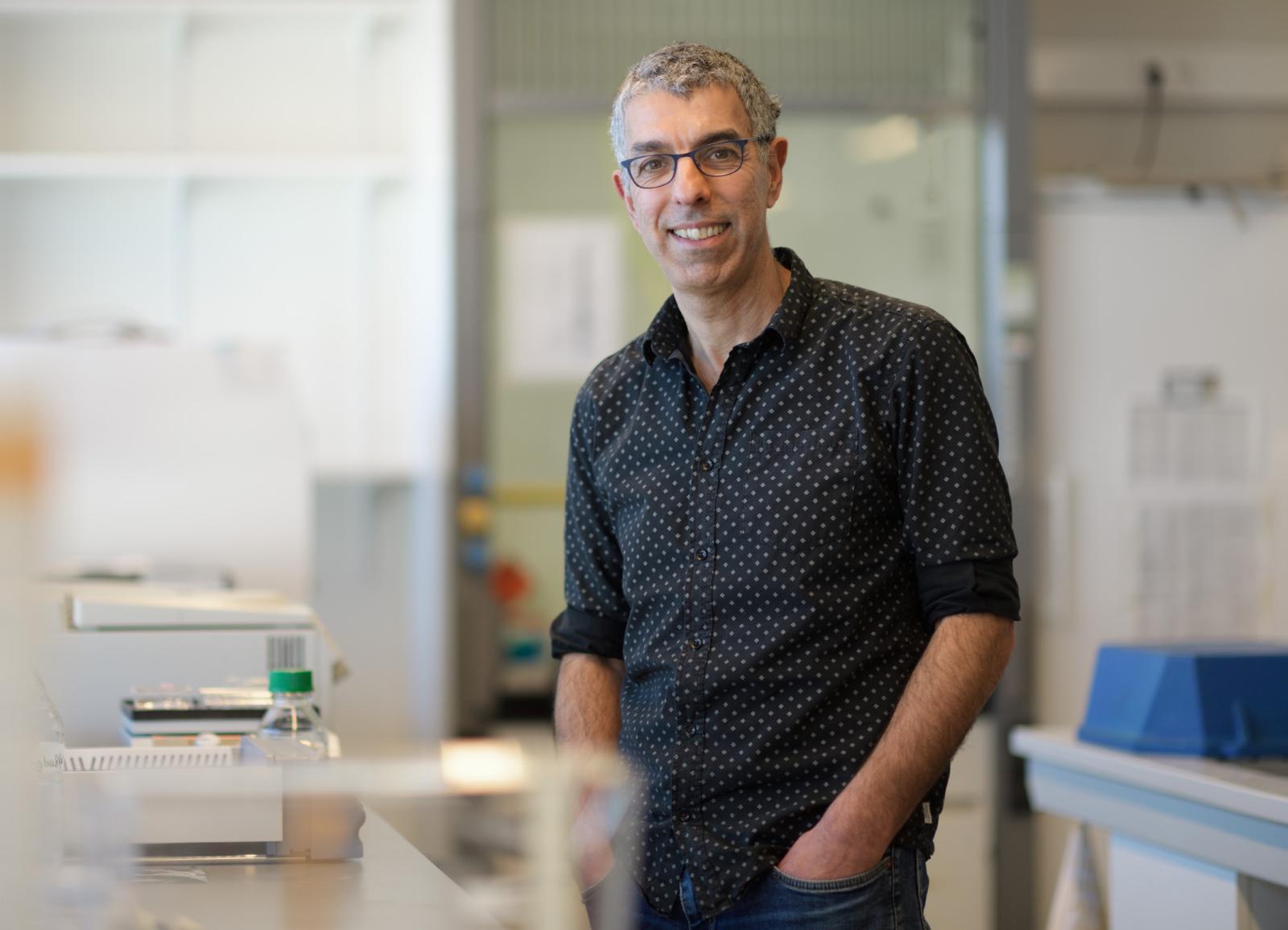
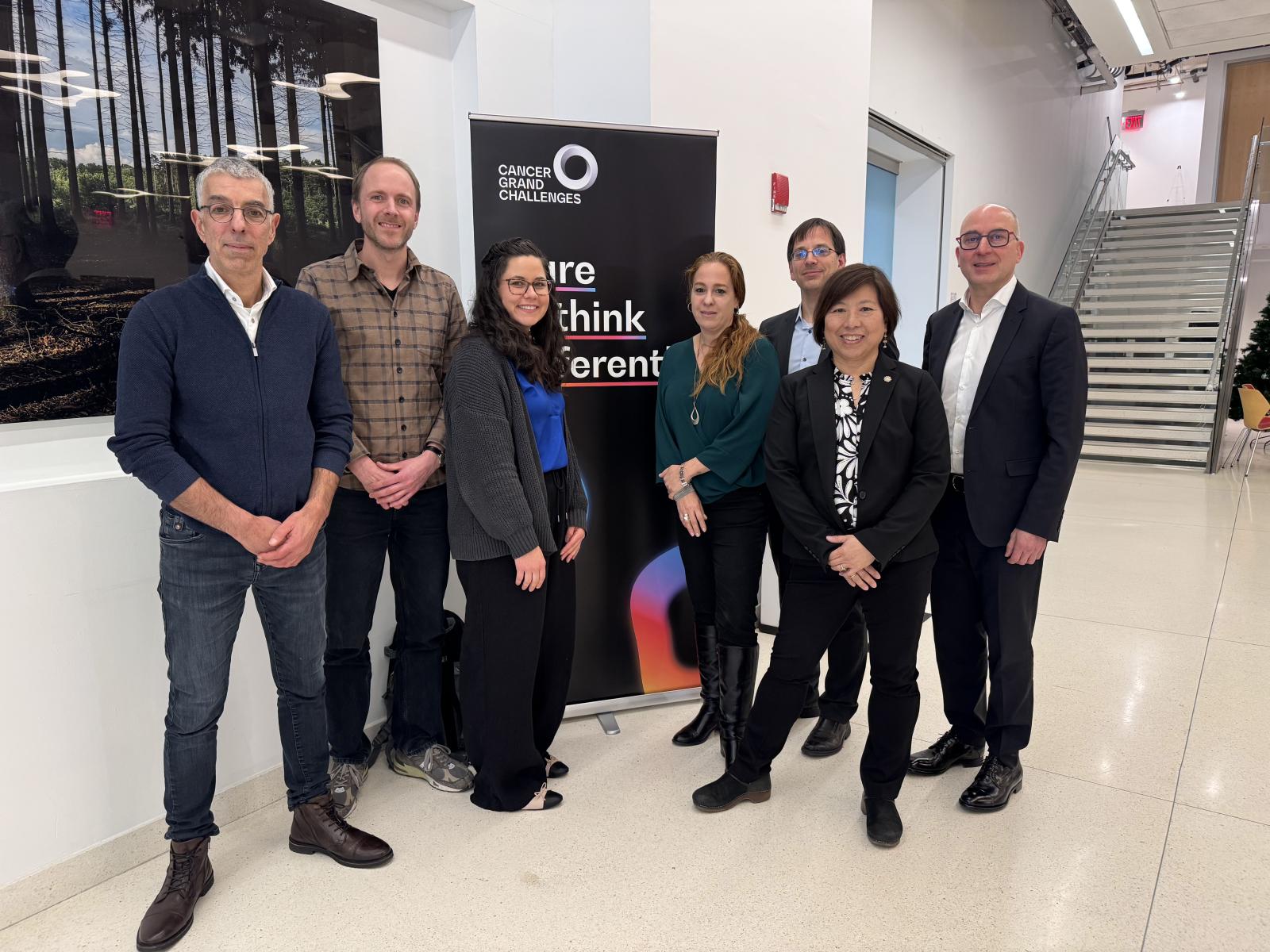
Reuven Agami knew he wanted to be a scientist from an early age when a school trip to the Weizmann Institute piqued his interest. He’s followed that curiosity ever since, and, with a bit of luck along the way, has made seminal discoveries as a Group Leader at the Netherlands Cancer Institute (NKI). Reuven is now leading ILLUMINE, the global interdisciplinary team taking on the dark proteome Cancer Grand Challenge.
Here, Reuven takes us behind the scenes of the development of shRNA, which transformed mammalian functional genetics by making gene silencing stable, fast, cheap, and scalable— enabling everything from individual gene studies to genome-wide screens. The technology became widely used in labs worldwide, with the publication in Science cited nearly 7,000 times, despite being initially rejected by Nature just one day after submission. He shares how the shRNA construction was inspired by his early work on parasites, how he got from there to working on the dark proteome, and team ILLUMINE’s plans to unequivocally prove that the dark proteome matters and can make a real difference in cancer.
Through Cancer Grand Challenges ILLUMINE is funded by Cancer Research UK,
the US National Cancer Institute, Cancer Research Institute, and KiKa
(Children Cancer Free Foundation).
Want to learn more about the dark proteome? Read the plain language summary of team ILLUMINE’s approach.
I’m originally from Israel and when I was 11 years old, I went on a school trip to the Weizmann Institute, just for one day. We visited the nuclear accelerator and heard science being discussed. The trip really changed my perspective and ever since then I wanted to be a scientist. For my birthdays, I remember getting cash, which I used to put in an envelope and mail to the US to get a subscription to Scientific American and National Geographic.
I did my Bachelor’s at Tel Aviv University and then my Master’s and PhD at the Weizmann Institute. At that time when I was applying, there was only a 30% chance of getting in— I was lucky!
My PhD supervisor was Yosef Shaul, a very smart guy, and we always had a lot of discussions. We would go and drink coffee in the institute and talk to everybody there, exchange ideas. It was very stimulating and taught me to be curious about everything.
Then I got a long-term EMBO (European Molecular Biology Organization) fellowship and moved to the Netherlands to work as a postdoc with Rene Bernards. Rene is also brilliant; he can spot things so clearly. In his lab I was free to do what I wanted and learnt to be more independent.
I did my Master’s in RNA, studying the parasite Leishmania. They have a special phenomenon where producing protein requires trans-splicing, as opposed to canonical cis-splicing in mammalian cells. There’s a splice leader RNA and only when it’s attached to the mRNA via trans-splicing is the machinery brought in to produce protein. This background turned out to be very important when I started my lab almost ten years later…
During my PhD I studied virus-host cell interactions, mostly connecting DNA damage, c-Abl, and apoptosis, a paper we managed to publish in Nature. When I moved to Rene’s lab I initially continued working on c-Abl, but then following an observation around cyclin D1 degradation after DNA damage, an event not observed before, I switched topics. Quite quickly we published a paper in Cell, showing that G1 cell cycle arrest is a two-step process.
When I started my lab, almost the same day, Thomas Tuschl’s lab described siRNA for transient knock-down of proteins in mammalian cells in Nature. And of course, the labs of the Nobel Prize winners Victor Ambros and Gary Ruvkun had previously discovered endogenously expressed microRNAs— short hairpin-forming transcripts that are cleaved to generate short RNAs that regulate gene expression. This got me thinking.
I was walking down the corridor of the institute and bumped into Thijn Brummelkamp, now Director of the NKI. At that time, he was a PhD student looking for things to do. I told him my idea to stably express siRNAs: If we used the same construction as the splice leader RNA that I had worked on in Leishmania, and put in a kind of predesigned microRNA instead, then within the cells it should be turned into an siRNA and switch off target gene expression permanently.
We decided to test this with p53, often referred to as the guardian gene of our genome, trying five different designs. I still remember going to the dark room— back then you had to develop the western blots by exposing films for different lengths of time— and seeing clearly that p53 had permanently vanished with one of our short hairpin RNA (shRNA) designs. At that time, September 2001, it was magic. In February 2002, only 6 months later, we published a small paper in Science, describing the pSuper shRNA system. It did not go without problems, though; the paper was first rejected by Nature just one day after submission! Later on, Nature said they regretted the decision, as it has now been cited almost 7,000 times.
That was my first paper as a Group Leader! Once it was published, every week we would receive hundreds of emails requesting the vector. At the time there wasn’t a plasmid repository for easy distribution, like Addgene. So Thijn and I were the ones sending it out. At one point, we had to reserve a whole day for pipetting aliquots into envelopes and sending them to everybody. So many people were using it!
After describing shRNA, we worked a lot on microRNAs and then on RNA-binding proteins and polyadenylation, which can change microRNA biology. Then we found promoters that could affect translation, showing that things that happen in the nucleus can affect things in the cytosol via mRNA modification. With that we entered the translation space and started to investigate what happens to cancer cells under stress using ribosome sequencing (developed by ILLUMINE Co-Investigator Jonathan Weissman’s lab).
We only started to think about substitutions and alterations that lead to aberrant proteins (part of the dark proteome) serendipitously when we looked into amino acid shortages. We expected the ribosomes to stall at these codons, but some of them were still moving! Of course we wanted to know why. We showed, together with the group of Yardena Samuels at the Weizmann Institute, that these ribosomes were going out of frame on the mRNA and producing aberrant peptides that were being presented on the cell surface. But then we also observed a bizarre phenomenon: cancer cells could still produce in-frame proteins without the essential amino acid. How is this possible? We found that they do it by misreading—placing another amino acid instead. We called these substitutions “substitutants” to refer to their inducible nature by nutrient shortage and to distinguish them from genetic mutations in DNA. This was a real breakthrough, which we initially discovered using reporter assays; as with proteomics, you can only find what you are looking for. Once we changed the reference proteome we were using, these substitutants popped up everywhere, also in proteomic datasets from other researchers. This really changed how we thought about the dark proteome in cancer.
We want to unequivocally prove that the dark proteome matters. Of course there are sceptics, asking what is the contribution to the proteome or the immunopeptidome? Is it really something that is cancer-specific and targetable? But with mutations, as little as one mutation in the wrong place within the whole three billion letters of our genome, for example in p53, can generate a defective cell. At the end of the day, if it hits the wrong thing there can be catastrophic effects… we have to find this thing.
We want to understand the rules of dark proteome production, how we could stimulate production even more, and then target them. We hope to show that the dark proteome really can be utilised for cancer therapy.
Learn more about team ILLUMINE, including a plain language summary of the team’s approach.
Discover all five new teams and how they were selected.
Find the whole series on our news page: The stories behind the science.
Edited by Rebecca Eccles
Leanne Li on scientific liberation and creating scientific waves
Paul Bastard on looking at cancer through the lens of autoimmunity
Ludmil Alexandrov on leaving a lasting mark on cancer prevention