
ILLUMINE
Led by Reuven Agami, Netherlands Cancer InstituteThe challenge
ILLUMINE is taking on the dark proteome challenge. By comprehensively mapping and characterising the function of the elusive dark proteome, the team hopes to reveal its role in cancer and uncover new opportunities for treatment. Ultimately, ILLUMINE aims to uncover novel, potentially universal tumour antigens and develop innovative immunotherapies, changing the treatment landscape for hard-to-treat cancers.
At a glance
ILLUMINE is funded by




Team and leadership
ILLUMINE is led by:
Reuven Agami, Netherlands Cancer Institute
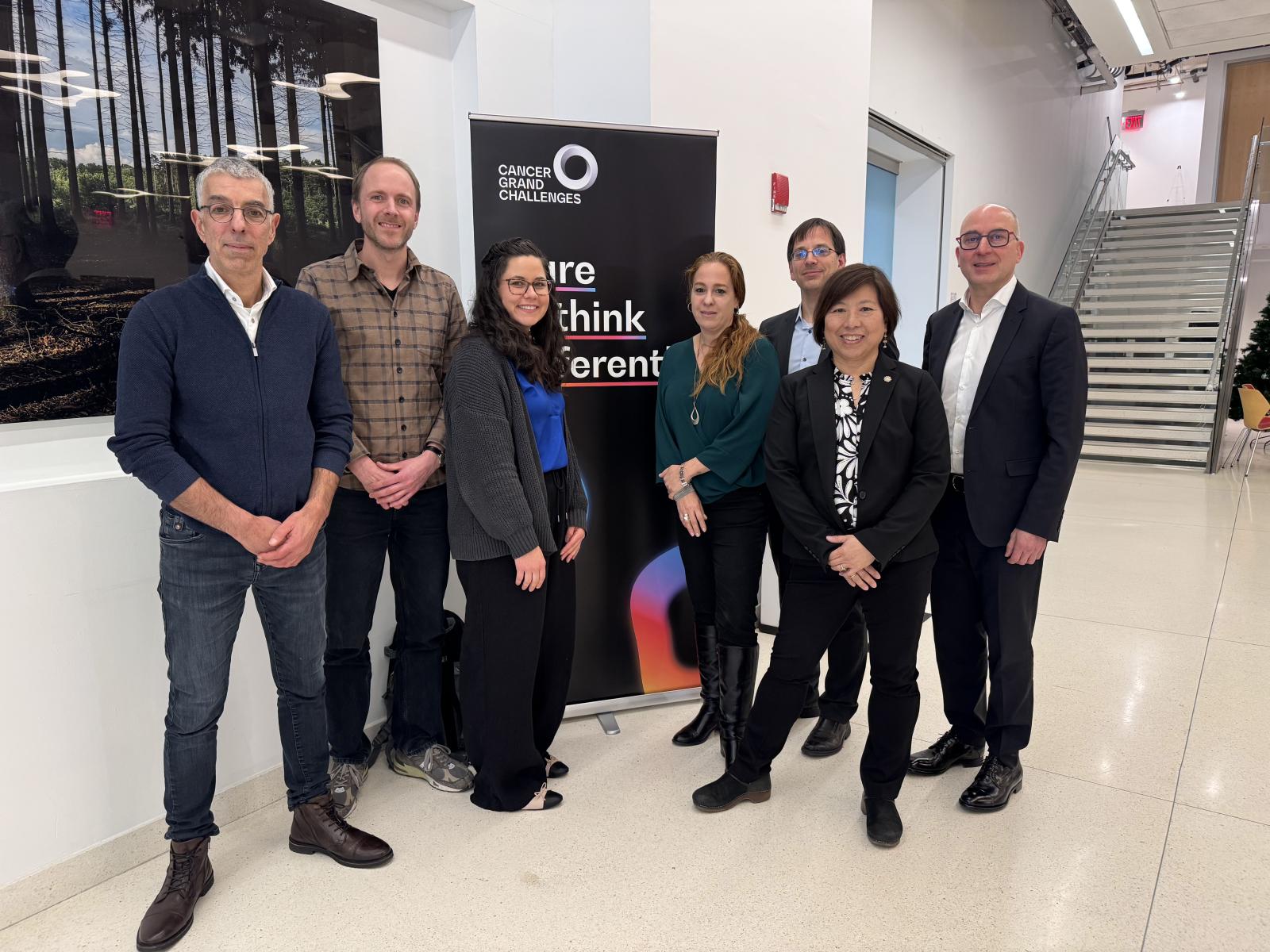
ILLUMINE brings together technology innovators, including the inventor of ribosome profiling— the technique which uncovered just how widespread dark proteome production is — with leading experts in the dark proteome, immunology, cancer modelling, as well as spatial and stress biology.
Tackling the dark proteome challenge
The ILLUMINE team will comprehensively map and characterise the dark proteome, focusing on microproteins, mistranslated polypeptides, and repeat element- and proteasome-derived proteins.
The team will first create an unprecedented atlas of the cancer dark proteome. It will elucidate the translatome, proteome, immunopeptidome and protein degradation landscape of hard-to-treat cancers including acute myeloid leukemia (AML), ovarian, lung, pancreatic, and paediatric brain tumours. ILLUMINE will also explore how the dark proteome evolves as cancer progresses by investigating how these elusive peptides are shaped by physiological stressors that cancer cells must overcome, including nutrient stress, hypoxia, senescence, and therapy. This atlas will act as a platform for the team and the wider research community in delivering dark proteome targets for immunotherapy.
Capitalising on its unique expertise the team will leverage and integrate cutting-edge approaches such as immunopeptidomics, ribosome profiling, functional genomics and T-cell receptor (TCR) engineering to characterise the function and origins of the dark proteome. ILLUMINE aims to identify the general principles governing dark proteome production in cancer and beyond, as well as decoding its phenotypic impact.
The team will go on to identify natural or design synthetic TCRs that recognise candidate target dark peptides and proteins. To accelerate translation of identified TCRs into the clinic, ILLUMINE will use advanced pre-clinical disease modelling to validate them. The team will further screen for genetic regulators, biological modulators and drug inhibitors or inducers of dark proteome targets, to develop novel approaches to enhance the impact of dark proteome-based therapies, thereby overcoming potential issues such as low level, transient or heterogeneous expression of dark proteome targets.
ILLUMINE will collaborate with the Cancer Grand Challenges MATCHMAKERS team, addressing the T-cell receptor challenge, to create a continuous pipeline of discovery, validation, and translation for dark immunopeptide candidates shared across tumour types. ILLUMINE will also utilise team IMAXT’s Spatial Profiling and Annotation Centre of Excellence (SPACE) in order to spatially profile T cell responses within tumours using mass spectrometry imaging (MSI).
Looking ahead
ILLUMINE aims to uncover hidden layers of cancer cell biology to identify novel, potentially universal tumour antigens. Ultimately the team’s work aims to drive the development of innovative immunotherapies for hard-to-treat cancers, transforming patient outcomes.

Plain language summary
The Challenge
Proteins are the essential building blocks of life, created using instructions from our DNA. Usually, when proteins behave differently in cancer, scientists can trace the cause back to mutations, errors or changes in the DNA code. However, scientists have recently discovered a mysterious group of proteins called the ‘dark proteome’. These unusual proteins are made from unknown genetic instructions or have unexpected modifications that cannot be explained by changes to our DNA. Scientists don't yet fully understand where they come from or the role they play in cancer.
This Cancer Grand Challenge aims to shed light on how and why cancer cells make these unusual proteins and whether they can be targeted for new treatments.
ILLUMINE’s approach
The ILLUMINE team plans to focus on hard-to-treat cancers, creating an unprecedented atlas of the cancer dark proteome. It plans to use cutting-edge experimental techniques to uncover where dark proteins come from, how they are made, and what they do. The team plans to also explore how the dark proteome changes as cancer progresses. It will investigate how these mysterious proteins are shaped by stresses that cancer cells are subjected to, including limited nutrients, decreased oxygen and cancer treatment. By characterising what the dark proteome does and how it is made, the team aims to identify the general instructions for producing the dark proteome in cancer and beyond, and how it is used. Like detailing how planes, trains and automobiles are made and then how to drive them, navigating in both normal and stormy conditions.
The team plans to also ask whether the cancer dark proteome produces dark ‘antigens’. An antigen is something the immune system sees as a threat and reacts to — like a name tag that helps it spot cancer cells and attack them. The immune system uses T cells as security guards to recognise these name tags, but they need specific receptors to see specific antigens, or the right pair of glasses, to read the name tag.
The team plan to identify the T-cell receptors in our bodies that can recognise dark antigens, identifying which glasses can see which name tags. Where it cannot identify existing receptors, the team will design new ones, coming up with new glasses tailored for the job, like sunglasses for when it is bright. These T-cell receptors can then be harnessed for immunotherapy and the team plan to thoroughly test them in pre-clinical models to accelerate translation into the clinic.
ILLUMINE hopes its dark proteome atlas will act as a platform for the team and the wider research community to identify dark proteome targets for immunotherapy.
To enhance the impact of dark proteome-based therapies the team plans to screen for regulators of dark antigens, investigating both biological processes and pharmaceutical approaches. This would ensure the name tags stay stuck to all of the cancer cells in a tumour and that the text is always big enough to read by the T-cell receptors glasses.
Capitalising on its unique expertise the team plans to use and combine cutting-edge experimental approaches to uncover hidden layers of cancer cell biology. ILLUMINE aims to ultimately identify new tumour antigens that are potentially found across cancers and develop innovative immunotherapies for hard-to-treat cancers, transforming patient outcomes.