InteroCANCEption
Led by Leanne Li, Francis Crick InstituteThe challenge
InteroCANCEption is taking on the nervous system and cancer challenge. The team is investigating interoception, the way the brain and nervous system sense and respond to changes inside the body, to understand how the brain might detect tumours and even influence how they grow. The team aims to uncover the mechanisms by which the nervous system and cancer interact and ultimately develop transformative neural modulation strategies to improve patient outcomes.
At a glance
InteroCANCEption is funded by

Team and leadership
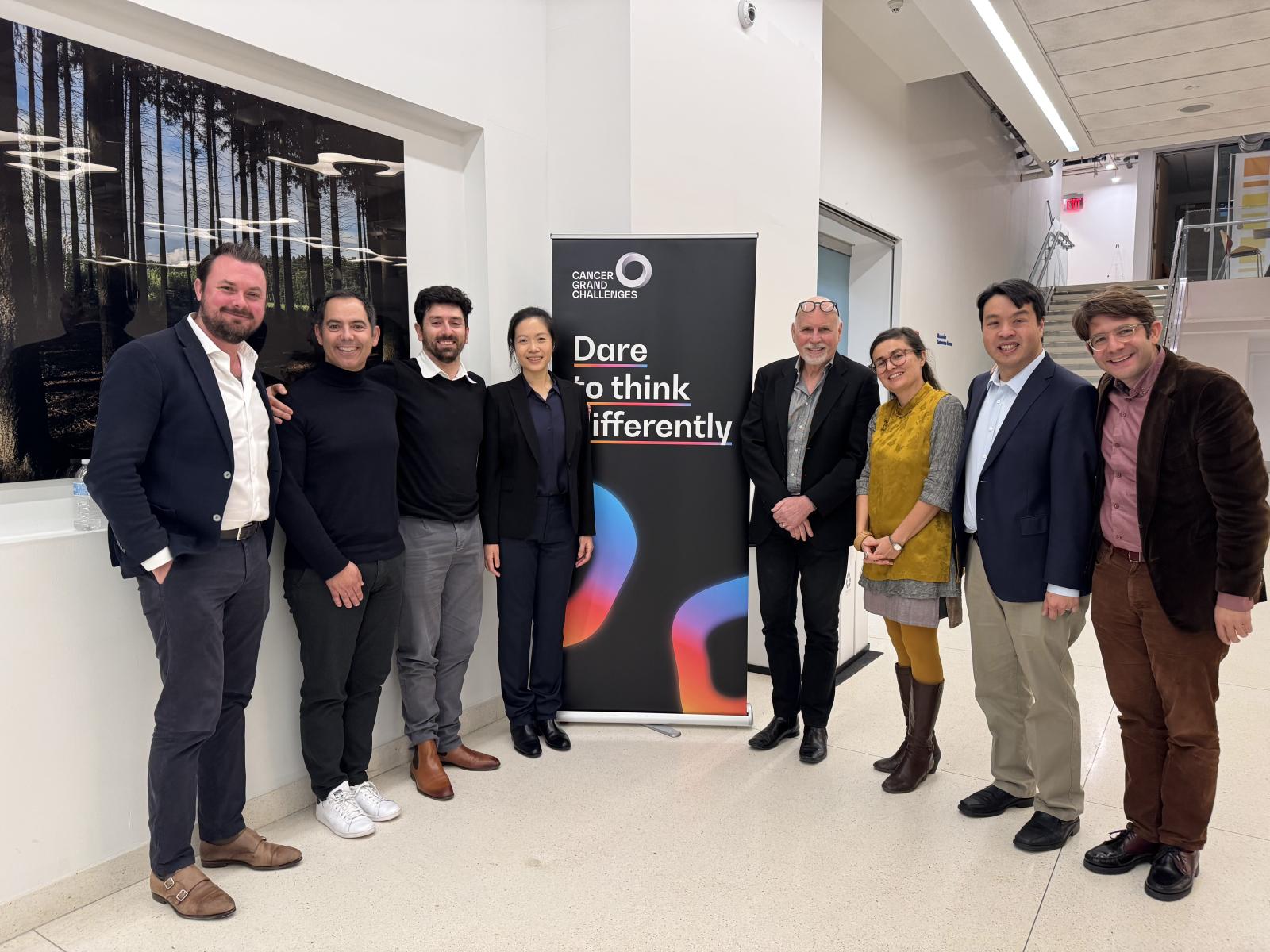
InteroCANCEption is led by:
Leanne Li, Francis Crick Institute
InteroCANCEption combines experts in cancer biology and in vivo modelling with trailblazers working at the interface of cancer with metabolism, immunology and neuroscience and pioneers of neuroprosthetic approaches.
Tackling the nervous system and cancer challenge
The InteroCANCEption team will approach the challenge by exploring the role of interoception – the ability of the brain to monitor organ states via the sensory nervous system and exert control over the body via the autonomic nervous system. The team’s work will build on the burgeoning cancer neuroscience field, with emerging findings showing that neural circuits can influence tumour growth, immune activity and metastatic spread, while cancer can in turn disrupt brain–body communication, leading to symptoms such as pain, fatigue and cachexia.
The team hypothesises that interoception is a fundamental organising principle whereby the brain can monitor tumour formation and influence cancer progression, via the brain–nervous system–tumour axis.
InteroCANCEption will decode this bidirectional crosstalk, generating detailed anatomical and molecular atlases. The team will investigate and map both direct local interactions within the tumour microenvironment, as well as long-range systemic interactions across tissues. To do this the team will use neural tracing and unbiased whole brain activity mapping integrated with functional perturbation experiments utilising cutting-edge optogenetics, chemogenetics and targeted ablation approaches. It will use advanced models to dissect interactions between lung, pancreatic, and colon cancers with the nervous system in native tissue contexts and assess the hallmarks of cancer in vivo upon selective neural perturbation to determine which neuron types promote or restrict cancer progression.
Given the role of the autonomic nervous system in controlling immunity and metabolism in healthy individuals, InteroCANCEption will also explore the role of autonomic nervous pathways in mediating cancer associated systemic effects impacting immune and metabolic homeostasis. The team aims to dissect direct neural effects from broader physiological changes that accompany cancer.
This ambitious team plans to develop neural modulation strategies, including the use of state-of-the-art neuroprosthetics (neural implants), to test if altering brain activity can impact the tumour, immune responses, or symptom burden. Ultimately the team aims to introduce selective neuromodulation approaches, opening new therapeutic avenues that synergise with existing ones to improve clinical outcomes.
Looking ahead
InteroCANCEption aims to move the burgeoning cancer neuroscience beyond descriptive observations towards a mechanistic understanding of tumour–nervous system interactions. The team’s work has the potential to reshape how cancer is understood, from a genetic and cellular disease to a disorder of integrated brain–body systems. Ultimately InteroCANCEption aims to introduce innovative therapies that target the nervous system, expanding what’s possible in cancer treatment.

Plain language summary
Our nerves do far more than make us feel pain or control movement – they constantly monitor and regulate what is happening inside our body. This connection between every organ and the brain is called interoception and it operates through an intricate network of nerve fibres. These nerve signals help the body balance how you use energy, how your immune system responds to viruses or bugs, and how your organs work. It is only in the last decade or so that we have begun to appreciate the role of this neural network in bidirectional communication between body and brain (the so-called body–brain axis). Recent research shows that this communication between body and brain also plays a crucial role in various diseases, but we still know very little about how or why.
The team aims to approach the challenge by investigating the role of interoception to monitor and respond to cancer. The team’s theory is that interoception allows the brain to monitor tumour formation and influence cancer progression, via the brain–nervous system–tumour axis.
InteroCANCEption plans to figure out how this axis sends signals back and forth, how the brain talks to the tumour, and the tumour talks to the brain. The team will make detailed maps of these connections. It plans to trace interactions within the microenvironment- in which the tumour resides, as well as interactions across organs. The teams also aims to use models to investigate interactions between cancers in the lung, pancreas and colon with the nervous system. The team hopes to use these models to determine which neuron types promote or restrict cancer progression, to identify which neural pathways are most affected by cancer and how different tumour types and locations shape these interactions. InteroCANCEption expects that, much like immune responses to cancer, nerve involvement varies depending on the type and stage of the tumour.
The team will use cutting-edge techniques to remove specific neurons. It will also use tiny lights and switches that can turn nerve signals on or off; to work out which nerve types help cancer grow and which might help stop it.
We know that the nervous system can control immunity and metabolism in healthy people. Therefore, InteroCANCEption plans to test whether these same pathways explain why cancer can cause whole-body effects such as weight loss, tiredness and changes in the immune system.
Understanding this hidden dialogue between nerves and tumours could transform how we think about cancer biology and open up entirely new therapeutic possibilities. The team will use its findings to develop novel approaches to treat cancer, including precision drugs or small implanted devices that modify nerve activity. Such devices have already been used to treat patients with neurological diseases. InteroCANCEption will repurpose them for cancer therapy, offering new ways to slow tumour growth, reduce symptoms, and improve quality of life for people with cancer.