

Bart Vanhaesebroeck on thinking differently about killing cancer cells
Bart Vanhaesebroeck on thinking differently about killing cancer cells

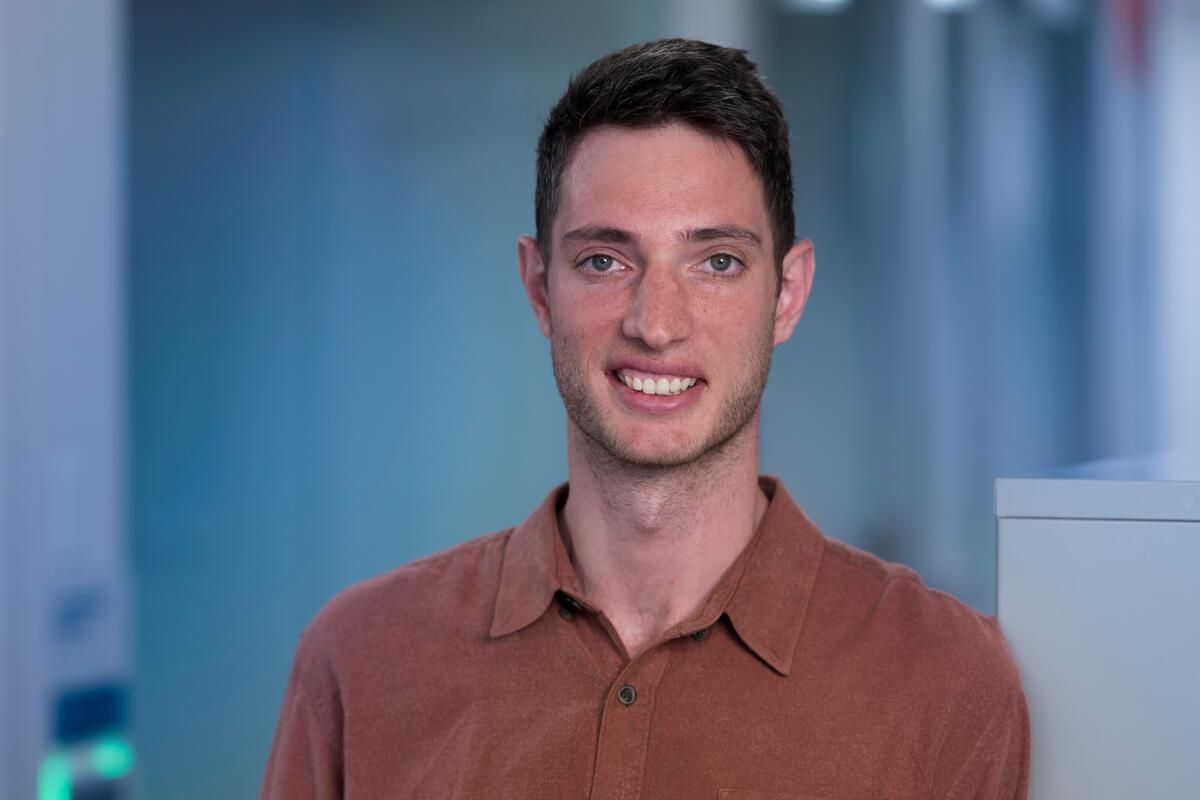
Ed Reznik is a computational scientist whose laboratory studies tumour metabolism at Memorial Sloan Kettering Cancer Center (MSKCC). He started working on cancer cachexia after hearing CANCAN Co-Team Lead Tobias Janowitz describing his own experience caring for his mother. Ed is now an integral member of team CANCAN, using what he describes as the most mundane data, body weight, to illuminate the complex trajectory of cancer cachexia.
We talked to Ed about his recent findings, published in Nature Medicine, which highlight the potential of routine clinical data and the models his laboratory developed to predict risk of a cachectic event, in the hopes of enabling patients and their clinicians to try and get ahead of this devastating condition.
Through Cancer Grand Challenges team CANCAN is funded by Cancer Research UK and the US National Cancer Institute.
Ed Reznik was at AACR back in 2023 when on a whim he attended a cachexia session, after hearing a plenary lecture from Teresa Zimmers. The first speaker was Tobias Janowitz, Co-Team Lead of Cancer Grand Challenges team CANCAN, funded in 2022 to take on our cachexia challenge.
Ed recalls the start of Tobias’ talk clearly, “There was a picture of a woman who had severe cachexia. It was already very sad, but then Tobias revealed that it was his own mother, who had since passed away.”
He continues, “I realised that cachexia itself is a metabolic phenomenon, a matter of energy imbalance. And it was related to, but not exactly like, the research that I was already doing. Rather than thinking about the metabolism of tumour cells, this was a question about the metabolism of the cancer patient as a whole.”
Ed was inspired to start working on cachexia. After the conference concluded he was discussing with his wife, a family physician. Ed reflects, “She’s shaped my entire life as a cancer scientist.” The two of them discussed the gap between textbook medicine and real medicine.
Ed explains, “She described to me how, in a textbook, there may be some optimal thing that you should do to treat your patient’s condition, but in the real world of practicing physicians, patients have multiple competing needs.” Cachexia is a prime example of this tension. Cachexia is often accompanied by fatigue, widespread tissue and organ dysfunction, and a significantly diminished quality of life, limiting a patients’ ability to tolerate toxic but potentially curative cancer treatment. Indeed, the CANCAN team often discuss the need to remember that tumours cannot be treated in isolation, as they reside in the complex ecosystem of their host. While the textbook may say a patient should receive a certain treatment, if they have developed cachexia, they may not be strong enough to do so.
Ed reflects, “Studying cachexia felt a lot closer to day-to-day medicine. And an opportunity to do a different kind of computational biology.”
Cachexia is commonly defined clinically by a 5% loss of body weight over a six-month period. Despite that simple definition, there have been few studies that have comprehensively studied cachexia in large cohorts of human cancer patients.
Ed realised his team could repurpose body weight measurements from MSKCC's sequenced cancer patients— over 52,000 adults. Ed reflects, “It’s a very mundane kind of data, but now suddenly at a scale that enables us to learn patterns related to how people lost weight over the course of their treatment.” These adults were followed on average for over four years, and the dataset covered diagnoses in 589 distinct cancer types.
Through some more persistence, his group also made his way into the CANCAN team. Ed’s work complemented the team’s approach perfectly. He comments, “CANCAN had a lot of basic science, a lot of mechanistic experiments, and an impressive human project, a prospectively enrolling study of hundreds of cancer patients with cachexia. We knew we could complement that with a very large-scale retrospective study.”
The team, co-led by Eileen White, Marcus Goncalves and Tobias, brought Ed on as a CANCAN fellow. The Team Leads were keen to create a dynamic and inclusive research culture, awarding fellowships to others interested in cachexia who could supplement the team’s expertise and together drive progress.
When Ed and his group started delving into the data, they spotted an issue with their initial statistical approach to studying cachexia. He highlights, “It's not like patients lined up at the clinic and then their cachexia immediately developed. Cachexia, just like progression on therapy, takes time to emerge.”
The team realised that with the weight measurements taken of patients throughout their cancer treatment at MSKCC, around 1.7 million measurements, they could rather look for dynamic windows or episodes of weight loss throughout their care.
Led by co-first authors Venise Jan Castillon and Amy Xie they developed a computational method to take real world body weight data, smooth it out, and look for these windows of cachectic weight loss.
Consistent with previous reports, the team found that around half of patients experienced cachexia and went on to show that over 20% of those experienced multiple episodes.
Ed comments, “Once we had these windows, it revealed some basic errors in our initial thinking, and ultimately transformed how we approached our analysis to unlock a whole bunch of discoveries.”
The team found mutations to TP53 (the most commonly mutated gene across cancers) were associated with increased cachexia risk across cancer types, and also found other mutations that were associated with reduced risk in specific cancer types.
The team also uncovered differences in how cachexia presented in patients with different tumour types. For patients with pancreatic or gastric cancers, they were likely to present early with cachexia, whereas for patients with other cancer types, cachexia arose much later in the trajectory of care. Ed highlights, “We revealed that you can have an episode of cachexia at any point in the trajectory of your care”
Studying cachexia requires a dialogue between scientists and physicians. Those discussions happen naturally among the clinical providers and scientific trainees at Ed’s lab meeting every week. He highlights the critical role of this interaction, “We have ideas as computational scientists and then the clinicians very quickly correct our course. They steer us in the directions that align with their clinical experience.”
The inspiration from Tobias and the CANCAN team has also continued, Ed comments, “CANCAN is a breath of fresh air. There are a lot of very strong team members, with complementary and sometimes contrary points of view. Being part of the team gave me the opportunity to hear lots of ideas, some of which ended up baking themselves into this and other work.”
The team went on to train statistical models to predict a patient’s risk of having cachexia in the near future, in the hopes of enabling patients and their clinicians to try and get ahead of this devastating condition.
Ed emphasises, “There are now trials testing therapies against cachexia, but only half of patients develop the condition. These models can predict who's likely to experience cachexia, so that one can enrich for those patients in the enrolment of a trial and ultimately increase the likelihood of success.”
Regarding his focus on simple clinical data to carry out his science and the negative reception it sometimes receives, Ed comments, “It drives me to continue to prove people wrong. There are lots of things in the medical record that can illuminate new, exciting, and important biology, and at no extra cost. We’re trying to do computational science that is close to day-to-day medicine but still asks incisive questions about basic biology.”
Read the paper in Nature Medicine: A health-system-scale, episode-resolved multimodal atlas of cancer cachexia
Written by Rebecca Eccles with thanks to Ed Reznik
Learn more about team CANCAN
Bart Vanhaesebroeck on thinking differently about killing cancer cells
Reuven Agami on curiosity, serendipity and the dark proteome
Leanne Li on scientific liberation and creating scientific waves