International clinical trial programme launched to harness the immune system against childhood solid tumours
International clinical trial programme launches to harness the immune system against childhood solid tumours

The NexTGen team is tackling one of the most difficult challenges in cancer research: how to treat solid tumours in children, where progress has remained limited for decades. In a new study published in Nature Medicine, the team reports the first clinical trial of a systemically delivered multi-antigen T-cell therapy that does not require gene engineering for the treatment of children and young people with high-risk brain tumours. The team asked what if the problem is not the strength of the immune response, but what the immune system can recognise in the first place?
The team’s preliminary findings suggest that their immune cell products designed to recognise several tumour targets at once, can be safely delivered, tracked in the body, and in some cases, associated with prolonged disease control. The work provides early evidence that broadening what the immune system can “see” may help it better recognise these complex cancers.
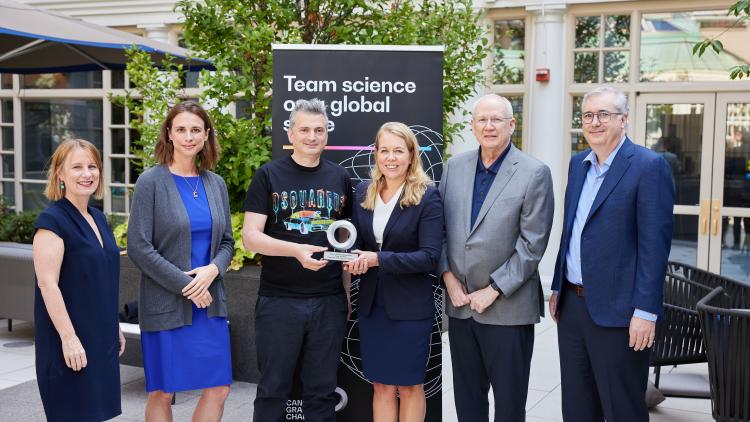
Through Cancer Grand Challenges team NexTGen is funded by Cancer Research UK, the National Cancer Institute, and The Mark Foundation for Cancer Research.
Brain tumours are the most common and deadliest cancers in children. Among them, diffuse intrinsic pontine glioma (DIPG) is particularly aggressive, with a median survival of around 11 months. For children whose tumours return or do not respond to treatment, options are extremely limited. Immunotherapy has transformed outcomes in some cancers by training the immune system to recognise and attack tumour cells. But in solid tumours, this approach has been far harder to translate. One reason is that these tumours are not uniform, they are more like a shifting landscape than a single target. If the immune system is trained to recognise just one feature, cancer cells that lack or lose that feature can escape. The question, then, is how to design therapies that can keep up.
To address this, the NexTGen team took a different approach. Instead of directing T cells towards a single tumour marker, the team engineered them to recognise three: WT1, PRAME and Survivin. These are proteins commonly found across paediatric brain tumours. Rather than searching for one specific signal, these T cells are trained to recognise several tumour proteins, making it harder for tumour cells to hide.
In the ReMIND trial, these multi-antigen-specific T cells were generated from each patient’s blood and infused back into the body. The study enrolled children with newly diagnosed DIPG, as well as those with relapsed or recurrent high-risk brain tumours. The primary goal was not to understand if the therapy works against the tumour, but to answer a more fundamental question: can this approach be delivered safely and feasibly in children?
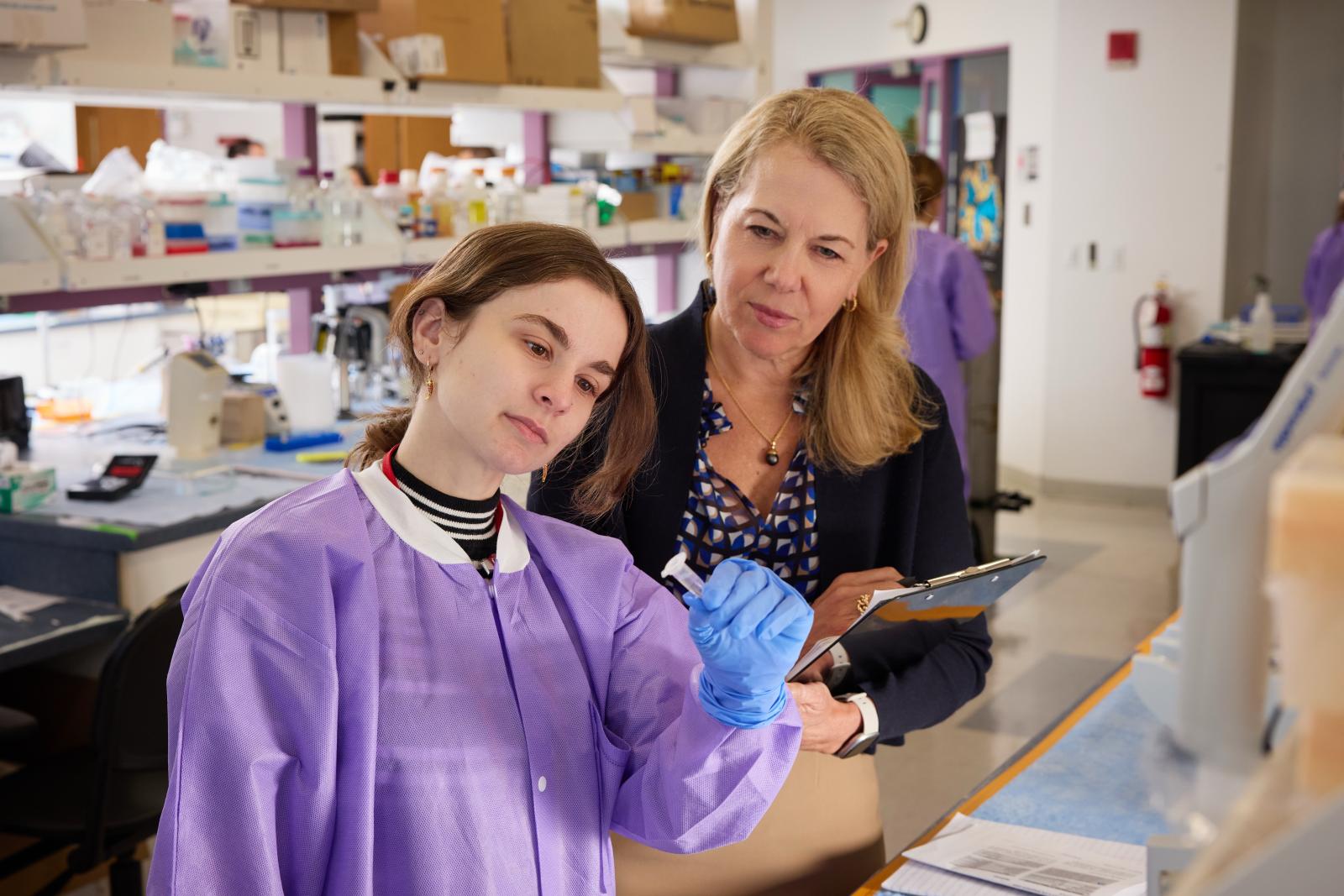
Turning an idea like this into a treatment is not straightforward. Each therapy must be manufactured individually, using a patient’s own immune cells. In this study, that process proved largely feasible. Of 48 patients whose cells were collected, 41 had a T-cell product successfully manufactured at a usable dose. As the trial progressed, improvements in collection and production meant that later patients consistently reached target doses, and more doses could be generated per patient. This may seem like a technical detail, but it is crucial. For children waiting for treatment, reliability matters just as much as biology. A therapy that works in principle must also be practical to deliver, especially in children.
One of the most important findings from the trial was that the investigational therapy was generally well tolerated. Most side effects, 88%, were mild to moderate, with fatigue and headache among the most common. These events are a reminder of how fragile this patient group is, and how carefully new therapies must be introduced. In a setting where treatments themselves can cause long-term harm, achieving this balance is critical. The overall safety profile of this non-gene engineered T cell product suggests that this approach can be delivered without the high levels of inflammatory toxicity seen with T-cell therapies that are gene engineered.
Although the trial was designed around safety, the researchers also looked for early signs that the therapy was doing something biologically meaningful. In patients with DIPG, median overall survival was 13.7 months from diagnosis, and many patients experienced a period of disease stability following treatment. In those with relapsed or recurrent tumours, some patients showed prolonged periods without progression. A small number experienced more striking outcomes, including one complete response and several long-term survivors without evidence of disease. These are early signals, and the authors are careful not to overinterpret them, as more research is needed to understand whether these potential treatments are effective. But in diseases where progression is often rapid, even stabilisation can be meaningful.
To understand what was happening after infusion, the team tracked the behaviour of the T cells in the body. Using TCR sequencing, they found that the infused cells could be detected in the bloodstream over time, with a pattern of expansion shortly after treatment followed by contraction, a signature of an active immune response. This pattern suggests that the infused cells are not simply present, but actively responding. At the same time, levels of inflammatory signalling molecules such as IL-6 and IL-8 increased in the weeks after infusion. This suggests that the therapy was triggering immune activity, but without the strong inflammatory signals often linked to severe toxicity.
Together, these findings provide a first glimpse of how multi-antigen-specific T cells behave in patients, not just whether they can be delivered, but how they might interact with the immune system over time.
This study represents an important step for NexTGen and for the wider field. It shows that a multi-antigen T-cell approach can be brought into the clinic for children with brain tumours, and that it is both feasible and, in general, tolerable. More broadly, it points to a potential way of tackling one of the central challenges of solid tumours: their complexity. By expanding what the immune system can recognise, therapies may become harder for tumours to evade.
The work has already informed the next generation of studies. Future trials will explore ways to improve how these cells reach tumours, and how their activity can be enhanced once they are there. For children with high-risk brain tumours, where new treatment options are urgently needed, this represents progress towards developing more effective, tailored immunotherapies.
Article written by Gabriela Carreno
Read the paper in Nature Medicine
International clinical trial programme launches to harness the immune system against childhood solid tumours
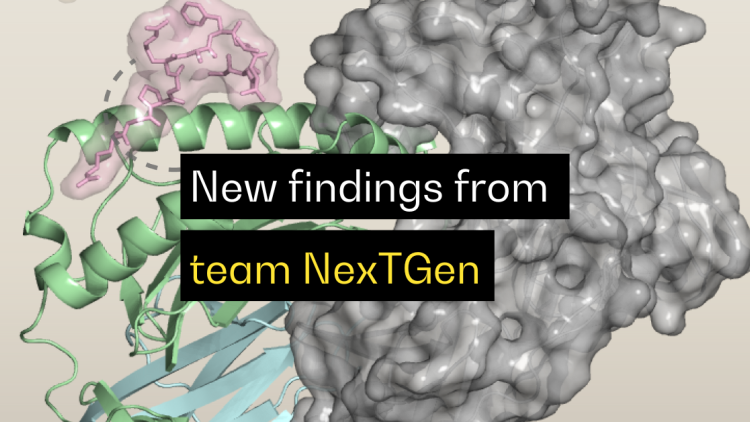
A new study in PNAS ‘CryoEM structure of an MHC-I/TAPBPR peptide-bound intermediate.'
Meet NexTGen, whose challenge is to develop novel therapies to target unique features in solid tumours in children.