
ecDNA: unfortunate accident or active player in glioblastoma development?
Team eDyNAmiC’s latest findings in glioblastoma, an aggressive, difficult to treat, brain cancer.

Cancer cells are masters of adaptation. One of the ways they evolve so rapidly is by carrying cancer-promoting genes on DNA rings that float outside of chromosomes, known as extrachromosomal DNA (ecDNA). These DNA rings allow tumours to produce extra copies of cancer-driving genes, fuelling aggressive growth, rapid adaptation and helping cancers evade treatment. This is why team eDyNAmiC is tackling the ecDNA challenge to understand the biology of ecDNA and how it can be exploited for cancer treatment.
Team eDyNAmiC published its latest findings in Nature Genetics, showing that the location of ecDNA within a cell can limit its power— highlighting a potential therapeutic vulnerability.
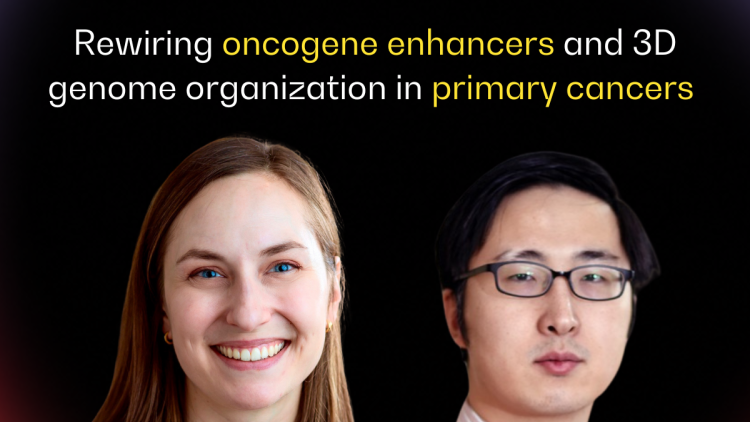
The work was led by three early career researchers, Lotte Brückner, Robin Xu and Jun Tang in the labs of Anton Henssen (Max Delbrück Center for Molecular Medicine and Charité Hospital, Berlin, Germany) and Paul Mischel and Howard Chang (Stanford Medicine, US). Here, Lotte takes us through the findings, including the relevance for aggressive childhood cancers. She also discusses her career so far, what it’s like to be a part of team eDyNAmiC and coordinate with over 60 co-authors, and where she was when she heard the paper was accepted.
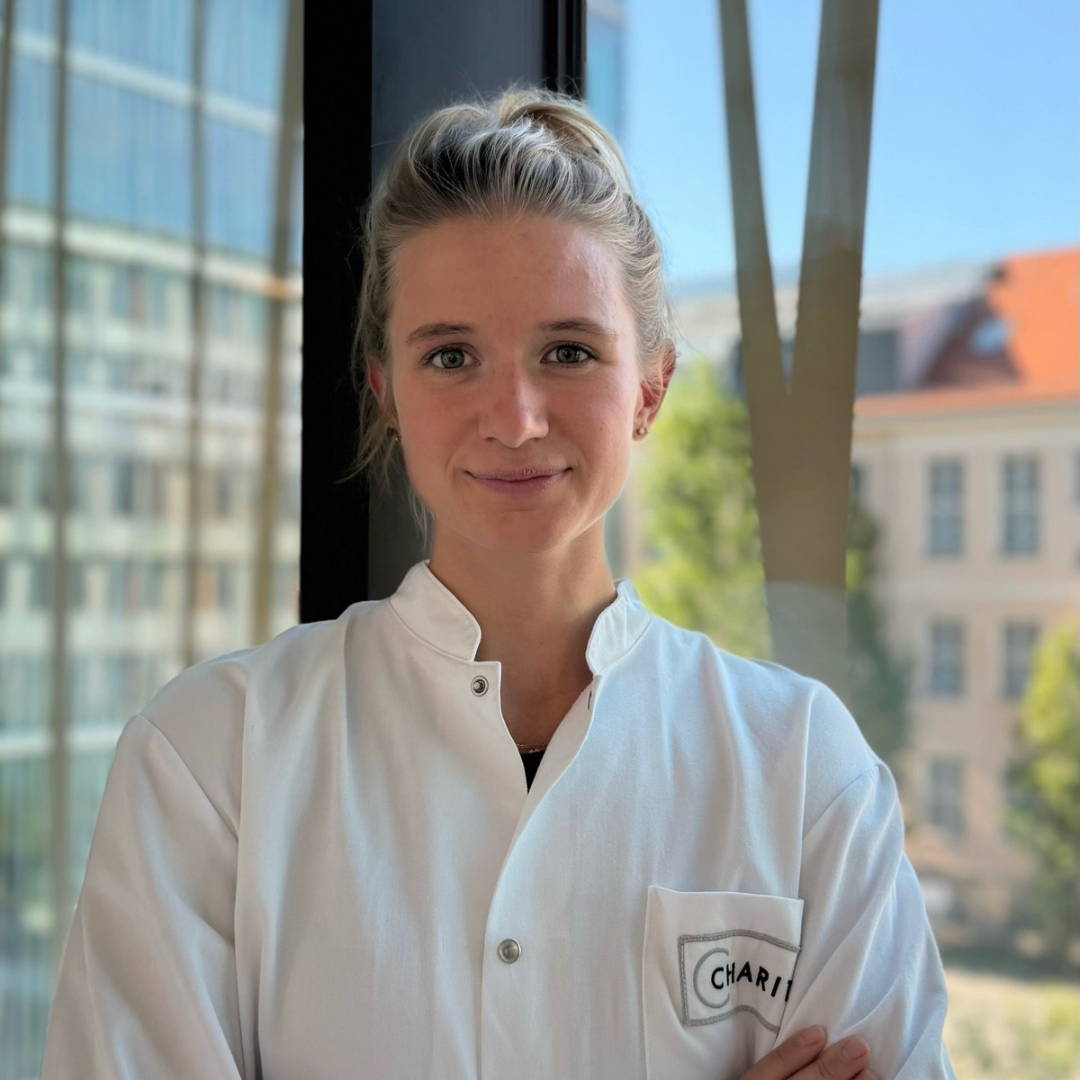
I am Lotte Brückner, a PhD student in the laboratory of Anton Henssen at the Max Delbrück Center for Molecular Medicine and Charité Hospital in Berlin, Germany. I have always been fascinated by biology, although I quickly realised that my interests lay less in plants and animals and more in understanding human disease. After finishing school in Germany, I moved to the UK to study Biomedical Science at the University of York. Following my master's research project in neuro-oncology, I knew I wanted to stay in cancer research, but with a stronger focus on genetics. That ambition ultimately led me to the Henssen laboratory.
Cancer is remarkably adaptable. One way some of the most aggressive tumours evolve is by carrying cancer-driving genes outside their chromosomes on small circles of DNA known as extrachromosomal DNA (ecDNA). These genetic elements allow tumours to rapidly evolve, adapt and resist treatment. My research focuses on understanding how ecDNA is inherited during cell division and why errors in this process can fundamentally alter tumour behaviour. In particular, I investigate micronucleation, the formation of tiny, separate nuclei that trap misplaced DNA during cell division, and how this process may represent an unexpected therapeutic vulnerability in ecDNA-positive cancers.
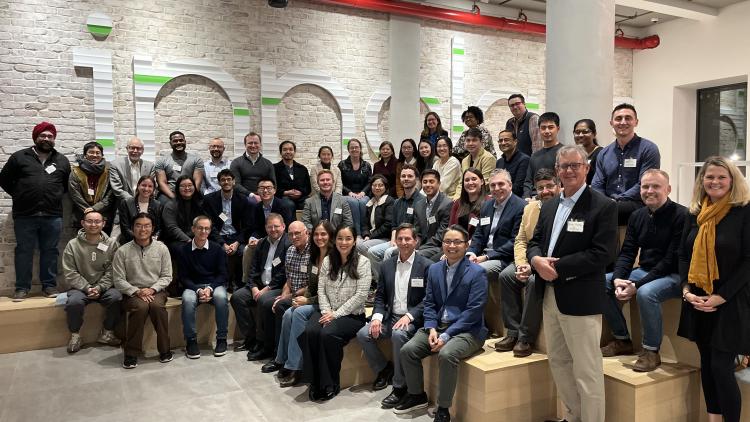
Our latest publication is a remarkable example of collabororation with over 60 co-authors, many of them part of team eDyNAmiC. I presented the project in an earlier version within one of the biweekly meetings of team eDyNAmiC, after which many group leaders and early career researchers reached out to contribute, having collected complimentary data. The study is the result of an international effort, spanning multiple research institutions and bringing together expertise in cancer biology, genomics, microscopy, computational analysis, mathematical modelling and clinical research. This is what is required to address such complex biological questions with direct clinical relevance.
We found that cancer cells containing ecDNA-positive micronuclei were less fit: they divided more slowly, were more likely to die, and were less able to sustain the high levels of oncogene activity that normally drive tumour growth. We also examined patient samples from children with MYCN-amplified neuroblastoma, an aggressive childhood cancer in which ecDNA is common. Strikingly, patients whose tumours contained higher numbers of ecDNA-positive micronuclei at diagnosis experienced significantly better outcomes, including longer event-free and overall survival. By revealing how the location of ecDNA within the cell can limit its power, the work opens new avenues for therapies that exploit this weakness to slow tumour growth and improve outcomes for patients with some of the most aggressive cancers.
This work would never have been possible without the incredible people around me. I was fortunate to share first authorship with two outstanding young scientists, Robin Xu, here in Berlin, and Jun Tang, at Stanford in California, whose contributions extended far beyond generating data. They were invaluable collaborators throughout the writing process and constant sources of support and ideas. People often describe writing a paper as a lonely experience, but that was never the case for me. Coordinating more than 60 co-authors certainly came with its challenges, yet every contribution strengthened the manuscript. The encouragement, feedback and collaborative spirit of my colleagues in the Henssen laboratory and the wider team eDyNAmiC made this work possible, and I am incredibly grateful to have been part of such a supportive scientific community.
While science has been one defining aspect of my life, sport has been the other. I have always been passionate about exercise, and during my PhD I discovered HYROX, a rapidly growing fitness race that combines endurance and strength. One of the most memorable moments of my life came when these two passions unexpectedly collided. Anton called to tell me that our paper had been accepted just one minute after I had completed my registration for the HYROX World Championships in Stockholm. I was standing inside the competition arena, looking around the course for the first time, when I received the call. It felt surreal that the two goals I had worked hardest towards over the previous years came together at exactly the same moment.
Read the paper in Nature Genetics: Micronuclear ecDNA constrains tumor cell fitness and is associated with favorable patient survival | Nature Genetics
Written by Lotte Brückner, edited by Rebecca Eccles
Learn more about team eDyNAmiC
Team eDyNAmiC’s latest findings in glioblastoma, an aggressive, difficult to treat, brain cancer.
New findings from team eDyNAmiC
New tool published by team eDyNAmiC.