PROMINENT
Meet PROMINENT, whose challenge is to understand how cells and tissues maintain "normal" phenotypes whilst harbouring oncogenic mutations and how they transition to become a tumour…

Team PROMINENT is investigating the fundamental question of how mutations and promotion interact to drive cancer development and how despite harbouring driver mutations, cells can remain “normal”. Here, we highlight the team’s latest findings, published in Science, which identify new opportunities for cancer prevention.
Through Cancer Grand Challenges, team PROMINENT is funded by Cancer Research UK, the National Cancer Institute and the Scientific Foundation of the Spanish Association Against Cancer.
Cancers are caused by a combination of genetics and environmental exposures which interact in complex ways to initiate and then promote development of tumours. While pure genetic models have significantly advanced cancer research, they fail to capture the true complexity of tumours induced by environmental factors. In its latest work led by Allan Balmain (UCSF), team PROMINENT explored how environmental mutagens and tumour promoters interact to drive cancer development in the skin.
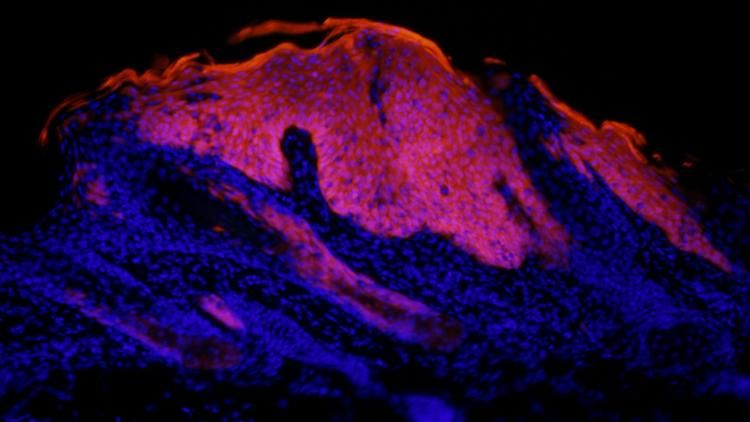
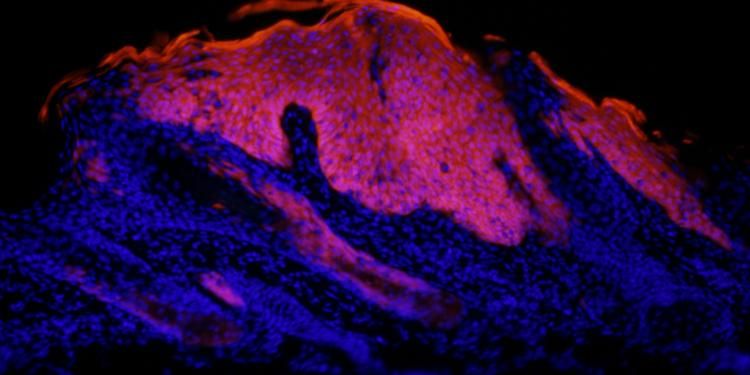
The team demonstrated that exposure to chemical mutagens leads to mutations in a distinct population of long-lived stem cells of the upper hair follicle of the skin, definitively identifying the cell of origin where cancer initiation takes place.
Interestingly, although these chemical mutagens create thousands of mutations across the genome, the mutated cells do not cause tumours directly, but require the exposure to a “tumour promoter”, which causes inflammation and drives the mutant cells to become tumours. The team showed that specific clones carrying the same HrasQ61L mutation survive in the skin for almost the whole life of the mice, but only start to expand after promoter treatment.
The team went on to reveal competition between Hras-driven cells and cells carrying spontaneous Kras mutations, with different populations expanding or shrinking depending on environmental signals and genetic context.
Allan comments, “We didn't realise how dynamic mutations are and how dynamic mutated cells are within normal tissue. They're competing for space, for nutrients, and they're killing each other. And this is happening all the time; we just haven’t been able to see it— but now we can, thanks to new ultra-deep sequencing approaches.”
The teams work underscores that cancer emergence is driven by selection pressures acting on cells with pre-existing, often long-term, mutations.
PROMINENT’s work highlights new ways to think about cancer prevention. Allan comments, “With Cancer Grand Challenges funding, now we can explore a range of strategies to prevent cancer by killing the initiated cells, inhibiting the inflammation that causes them to expand, or by changing selective pressures to modulate clonal dynamics and ensure that dangerous clones never emerge and cancer never develops.”
Written by Kate Stuart and Rebecca Eccles with thanks to Allan Balmain
Read the paper in Science: https://www.science.org/doi/10.1126/science.adv8291
Hero image: Immunofluorescence image of an early labelled lesion in red, which is derived from Lgr6+ stem cells in the skin. Credit: Eve Kandyba
Meet PROMINENT, whose challenge is to understand how cells and tissues maintain "normal" phenotypes whilst harbouring oncogenic mutations and how they transition to become a tumour…
Team PROMINENT's latest findings, published in Science, which identify new opportunities for cancer prevention.
New findings from team PROMINENT.