
AURORA brings human–AI collaboration to Cancer Grand Challenges
Putting AI co-scientists to the test
Three pioneer teams will help develop and test AI co-scientists to investigate cancer biology and guide the development of new treatments.
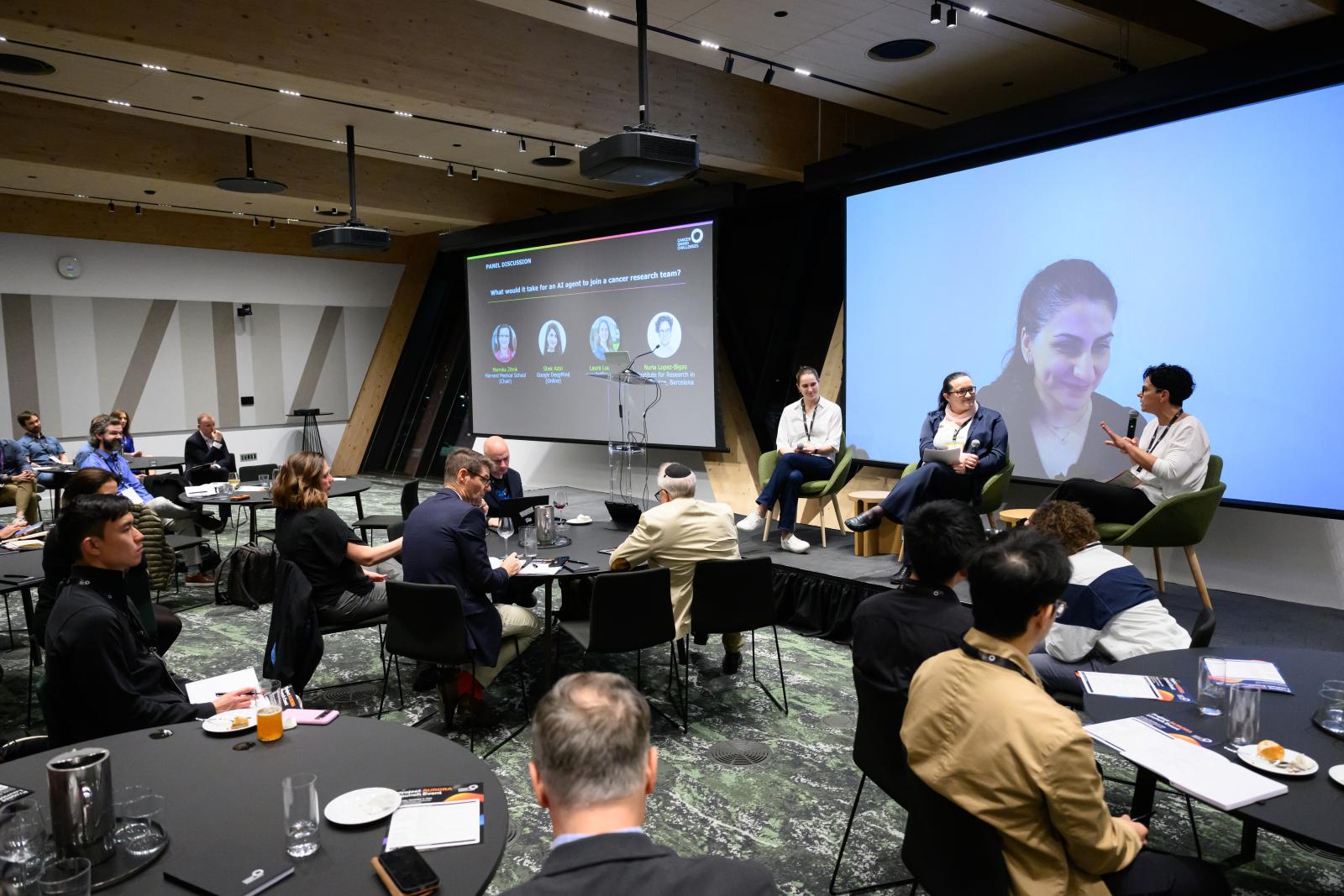
Led by Marinka Zitnik at Harvard University, the AURORA project will put AI co-scientists to the test and work alongside researchers to generate scientific hypotheses and prioritise experiments. The pioneering project aims to help scientists make faster progress against cancer’s toughest challenges using agentic AI tools. Teams NexTGen, PROMINENT and MATCHMAKERS will keep researchers in the driving seat, testing whether AI can support more effective decision-making and build on and enhance their existing research, helping them make progress against their individual challenges at greater speed and scale.
Turning information into insight
In a world of vast amounts of data and information, cancer researchers must connect evidence from multiple sources, weigh competing explanations and identify the most promising avenues for further investigation. Turning this wealth of information into meaningful biological insights remains a significant challenge.
“Cancer research generates vast and growing amounts of data, but turning that information into meaningful scientific insight remains a major challenge,” said Marinka Zitnik, AURORA Team Lead. “AURORA is exploring how AI can help scientists bring together and evaluate evidence more effectively, generating and testing new ideas while keeping researchers firmly at the centre of the discovery process.”
Project AURORA will explore how AI agents could help researchers analyse vast amounts of data, generate new ideas and identify promising experiments, potentially enabling them to work at a speed and scale that would be difficult to achieve through human effort alone. The teams will also investigate how AI agents could support scientists in tackling complex research questions, generating new hypotheses and uncovering insights that might otherwise be missed. By testing agentic AI in real research settings, AURORA will allow scientists to assess its outputs against experimental evidence.
A scientific collaborator
AURORA builds on ToolUniverse, developed by Marinka’s group to connect AI systems with scientific tools and data. This will enable the co-scientists to analyse evidence, generate testable hypotheses and propose experiments within the practical constraints of each research programme.
“The goal is to generate not only another chatbot that can search the Internet, but really equip these AI systems with the ability to use tools the way human researchers do and the ability to work collaboratively with them,” says Marinka.
Researchers will guide the questions, review the hypotheses and test selected ideas in the lab. Experimental results will feed back into the system, helping to refine subsequent proposals. Three pioneer teams will work with Marinka’s group to develop and evaluate this approach. The three projects will receive a combined total of $4m in funding, alongside their existing team funding, to help them accelerate progress against their individual challenges.
Accelerating progress against existing challenges
Designing better T-cell therapies
NexTGen is developing engineered T-cell therapies for children with solid tumours. Designing these treatments involves many interconnected choices: which features of a tumour to target, how to help T cells remain active and how to overcome the surrounding conditions that can suppress an immune response. The AURORA NexTGen team, led by Nicky McGranahan at University College London (UCL), will use agentic AI to help prioritise designs for CAR T-cell therapies for children. Project AURORA will test AI co-scientists to help researchers accelerate progress against the solid tumours in children challenge.
Understanding the steps towards cancer
PROMINENT is investigating why cells carrying cancer-associated mutations can remain normal, and what causes some to progress towards cancer. Led by Nuria Lopez-Bigas at the Institute for Research in Biomedicine Barcelona, the team will investigate how these mutations alter cell behaviour and contribute to tumour development. They will use automated genetic screens and cellular imaging to assess selected hypotheses to help accelerate progress against the normal phenotypes challenge.
Deciphering immune recognition
MATCHMAKERS aims to understand and predict how T cells recognise cancer. Generating the experimental evidence needed to do this requires narrowing down which tumour antigens and T-cell receptors to test from an enormous number of possible combinations. Welles Robinson and Sergio Quezada at University College London, will work with the Aurora AI group to develop two complementary AI co-scientists to address the T-cell receptors challenge.
Learning what AI can contribute
Across the three pioneer projects, AURORA will evaluate whether AI co-scientists help researchers generate useful biological insights and make better-informed experimental decisions. The teams will examine where the systems succeed, where they fail and how their performance changes as new evidence becomes available.
The longer-term ambition is to make these capabilities useful across the wider cancer research community, helping discoveries move towards benefits for people affected by cancer.
Find out more about AURORA and the selected team members.
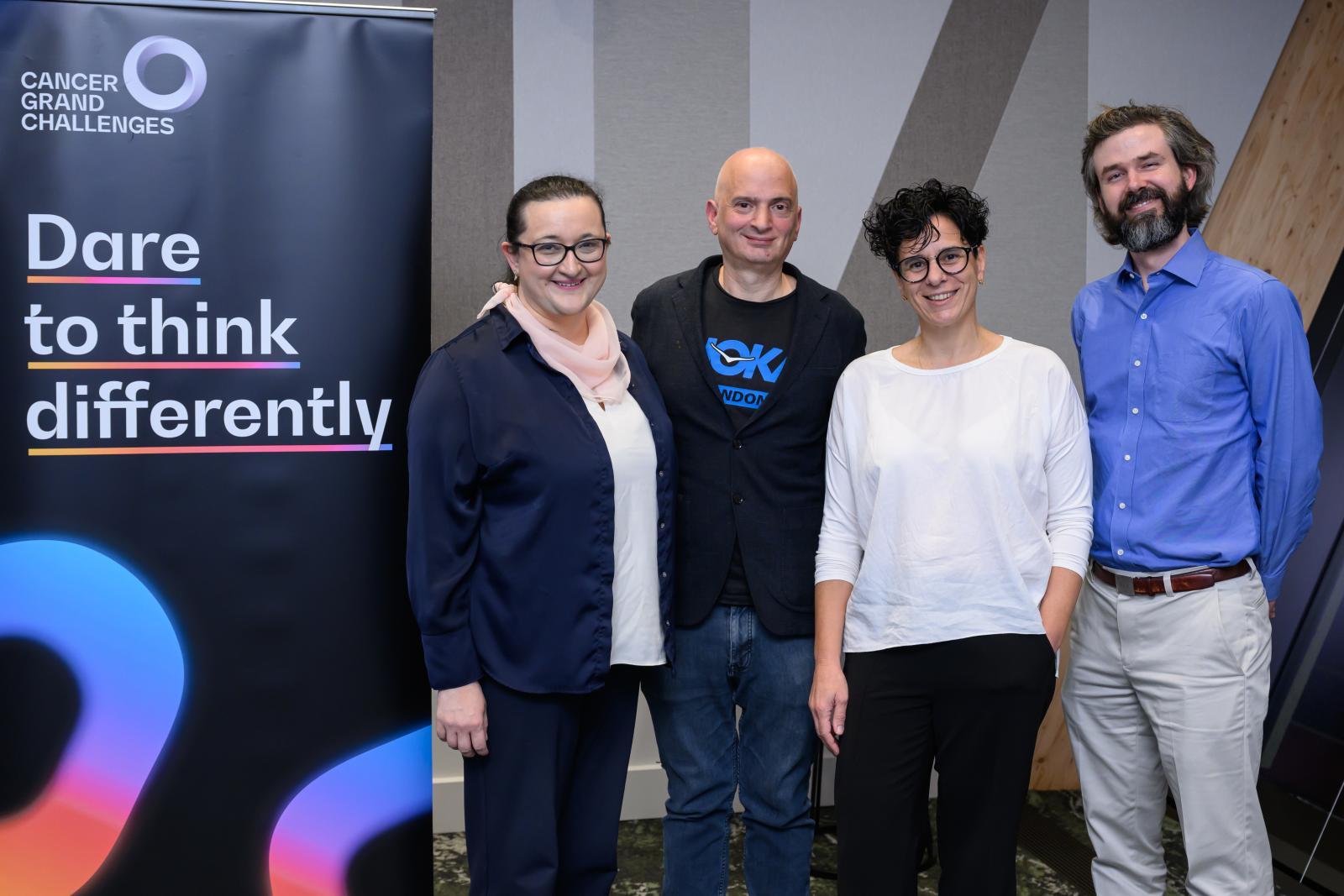
AURORA is funded by Cancer Research UK through Cancer Grand Challenges.
AURORA is a $10M programme designed to help our teams accelerate progress against their challenges. The three projects will receive a combined $4 million in funding.
For more information about how the pioneer teams are using AI, visit the team pages for NexTGen, PROMINENT and MATCHMAKERS.