Reflections from AACR: Cancer Grand Challenges enters a new era
Lorenzo de la Rica, Head of Research, shares his reflections on AACR
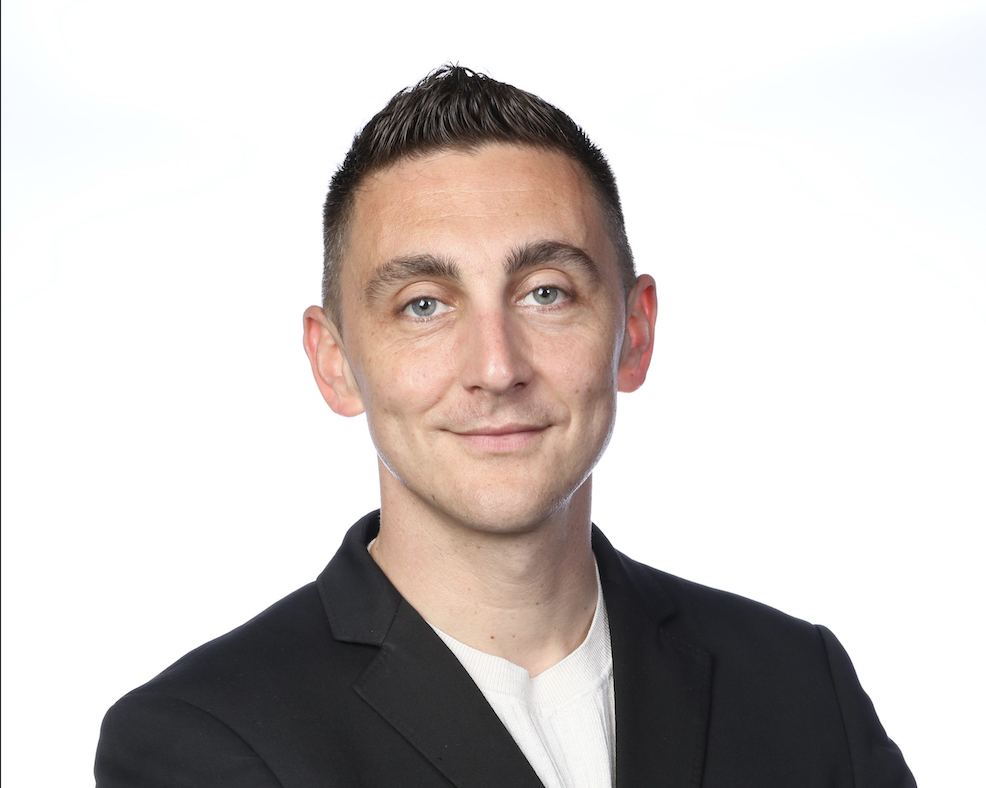
Cancer Grand Challenges’ Head of Research Lorenzo de la Rica is back in London after a week of stimulating science at AACR. Hosted this year in San Diego, AACR is the largest cancer research conference, with over 22,000 attendees. As well as fascinating talks showcasing the work of Cancer Grand Challenges funded teams throughout the programme, Cancer Grand Challenges also hosted a special session, ‘The Making of Cancer: From Cellular Events to Systemic Disease’. Here, Lorenzo reflects on his time at AACR, his scientific highlights and how cancer research is changing, in part driven by Cancer Grand Challenges, and the responsibility to keep evolving as an initiative.
Asking bigger and bolder questions
Walking through the busy halls of the AACR Annual Meeting in sunny San Diego this year, what struck me most was the sense that nowadays the way cancer research is framed, asked, and pursued at scale is changing. In my opinion, Cancer Grand Challenges is playing an important role in driving this shift. Cancer is no longer discussed as a local, late‑stage disease of rogue cells, but as a process that unfolds across scales, from single mutations, to tissue ecosystems, to whole‑body disruption.
When Cancer Grand Challenges launched almost a decade ago, it was a bold experiment. The ambition was to fund science that was too big for single laboratories, too complex for single disciplines, too global for single regions, and too risky for traditional funding mechanisms. The principle was that empowering global, transdisciplinary teams to tackle the toughest problems in cancer, would “move the dial” in those challenge areas.
At AACR, the world’s largest cancer research conference, our scientific community showed that the principle has been tested and increasingly, validated.
This year, Cancer Grand Challenges‑funded research was woven throughout the meeting: from plenary talks to major symposia, from late‑breaking science to conceptual sessions. Cancer Grand Challenges funded teams featured prominently in discussions on early‑onset cancers, mutational processes in normal tissues, tumour promotion, extrachromosomal DNA, cutting-edge treatment modalities, systemic disease, the role of AI in reshaping discovery… the list goes on. For me, this is a signal that the themes Cancer Grand Challenges has prioritised and funded are now central to how the field understands cancer, and I will draw on some examples to illustrate this point.
Mutations AND promotion: Rethinking how cancer begins
One of the most powerful conceptual shifts I saw at AACR concerned how we think about cancer initiation. For decades, it has often been framed as a debate: mutations versus environment, drivers versus promoters. What is becoming clear, and what Cancer Grand Challenges teams are helping to establish, is that these are not competing explanations, but deeply interconnected processes.
Normal tissues, we now know, are mosaics of mutant clones. Mutations accumulate throughout life, often silently, often without consequence. What determines whether cancer emerges is not simply the presence of essential “driver” mutations, but the context in which they operate: tissue environment, inflammation, immune pressure, epigenetic state and systemic cues.
This was the focus of sessions led by Cancer Grand Challenges teams including PROMINENT and Mutographs. Nuria Lopez-Bigas and Allan Balmain presented data from normal tissue sequencing, lineage tracing and mathematical modelling showing that many mutations long assumed to be cancer “drivers” are in fact positively selected in normal tissues without inevitably causing cancer. Conversely, truly carcinogenic mutations may be relatively rare, but devastating when combined with the right promoting environment.
This reframing matters. It transforms cancer causation from a deterministic checklist into a probabilistic, evolutionary process unfolding over decades. It also shifts how we think about prevention: not simply as the avoidance of mutagens, but as the interruption of selective environments that allow dangerous clones to expand.
Early onset cancers: A life course disease
For years, rising cancer incidence in younger adults was treated largely as an epidemiological curiosity: worrying, but poorly explained. What felt different at AACR this year was the convergence of population‑level signals with increasingly credible biological mechanisms. That is the focus of team PROSPECT, co-led by Andy Chan and Yin Cao. Andy chaired one of the coveted plenary sessions, focussed on early-onset cancers.
Across the Cancer Grand Challenges portfolio and beyond, we are seeing early‑onset cancer reframed as a life‑course disease. Birth‑cohort analyses demonstrate that generations born after the 1960s carry systematically higher lifetime cancer risk. But more importantly, mechanistic work is now trying to link those trends to early‑life exposures, for example, the hypothesis that microbiome‑derived mutagens (for example colibactin, the genotoxin produced by pks+ E. coli) leave permanent imprints long before cancer develops. This was previously suggested by work from team Mutographs, from Ludmil Alexandrov alongside Mike Stratton, Paul Brennan and colleagues. Ludmil is now leading one of our newest teams, CAUSE, in addressing the mechanisms underlying mutational signatures challenge, to characterise DNA adducts— chemical modifications that form when reactive molecules bind to DNA— and how they lead to mutations, potentially revealing where mutations of unknown origin come from.
To truly understand the global rise in early-onset cancer will require an international and multidisciplinary approach, bringing together genomics, microbiology, epidemiology and global cohorts—exactly like team PROSPECT. This is exactly the kind of question that Cancer Grand Challenges was built for.
Equally striking was how far the field has moved beyond viewing cancer as a localised problem. Discussions of cachexia and cancer‑associated metabolic reprogramming highlighted how tumours actively reshape host physiology, affecting muscle, brain, metabolism and immune function.
Cachexia is no longer seen as an unfortunate side effect of late‑stage disease; it is increasingly recognised as a biologically driven, therapeutically relevant process, and a window into how cancer evolves into a whole‑body disease. Understanding these processes is not only essential for patient quality of life, it opens entirely new avenues for intervention.
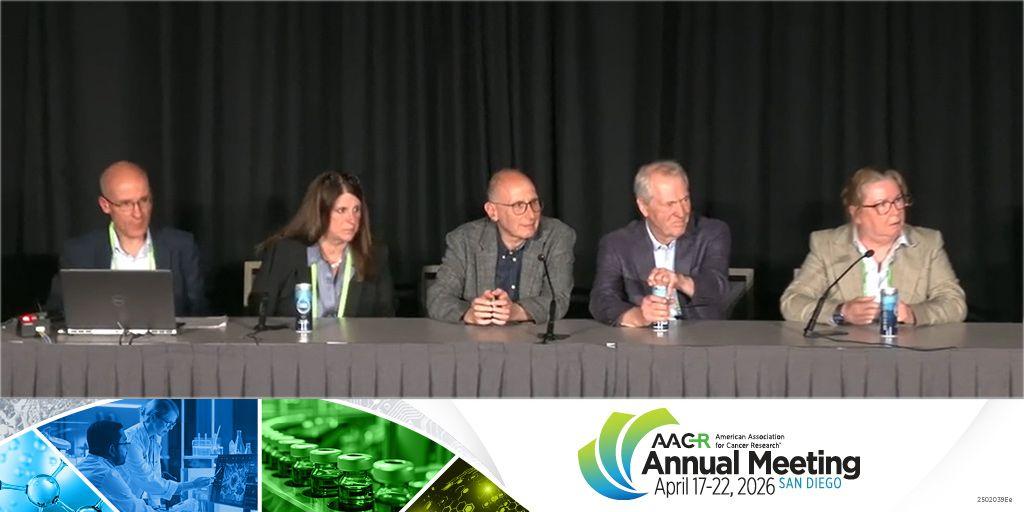
A session chaired by CANCAN’s Tobias Janowitz explored just this, as well as discussing cancer across biological scales, from cell‑intrinsic changes to systemic disruption. CANCAN’s Eileen White also explored this topic in the AACR-Cancer Grand Challenges special session, which also featured Karen Cichowski, Mike Stratton, Allan Balmain and Charlie Swanton and charted Cancer Grand Challenges' impact in transforming understanding of cancer from cellular events through to systemic disease. Thank you to the almost 400 people who attended and contributed to the fruitful discussion.
Agentic AI: Tools Becoming Partners
Perhaps the clearest sign that cancer research is entering a new phase came from sessions on agentic AI. Not AI as a black‑box predictor or administrative aid, but as an active scientific partner capable of reasoning across modalities, proposing hypotheses, interrogating literature and iteratively refining analysis with human oversight.
Through initiatives such as Project AURORA, the AI cancer co-scientist led by Marinka Zitnik in collaboration with selected Cancer Grand Challenges teams, we are helping ensure that these tools are developed and applied in ways that genuinely augment scientific insight, embedded within biological understanding, not detached from it.
A decade in, a responsibility to lead and never settle
Seeing Cancer Grand Challenges research so prominently featured throughout AACR made me extremely proud of what this extraordinary community of scientists all around the world are achieving together. But it also highlighted our responsibility. The initiative has shifted from a “bold experiment” to an established player in the global cancer research ecosystem and we must ensure Cancer Grand Challenges is evolving with the times. We must avoid complacency.
We must continue to fund science that is difficult, high-risk, and unfundable by any other mechanism. We must keep backing early discovery science, yet continue to push our teams to translate their findings into impact for patients. We must insist on openness and global collaboration.
Most importantly, we must ensure that impact is not measured only in publications or conference sessions. For the fields we put in the spotlight, how does Cancer Grand Challenges funding change them? The questions we can ask, the timescales we accept, and especially the impact on the patients we serve.
At AACR this year, I saw an entire community eager to think long‑term, collaborate internationally, and willing to take on difficult challenges. If Cancer Grand Challenges has contributed even a fraction to that shift, then the risk that Cancer Research UK and the NCI took in launching it has been worth it.
In many ways, this still feels like the beginning and we will continue to listen and learn, both from our funded scientists and the wider research community. Watch this space as we look to evolve Cancer Grand Challenges and enable accelerated and transformative discovery over the next decade!