
Are microbes associated with tumour tissue?
New findings from team OPTIMISTICC
The OPTIMISTICC team took on the microbiota challenge. Over the course of its funding, the team critically assessed the role of the microbiome in colorectal cancer and revealed the complexity of the challenge. In its latest work, the team took a look at the microbiome across cancer types. Through the development of a rigorous analysis pipeline, the team has now shown the biogeography of microbes in cancer is largely limited to cancers of the orodigestive tract, but that the biodiversity at those locations is more extreme than even OPTIMISTICC had realised. The work, carried out in collaboration with team PROSPECT which is taking on the early-onset challenge, is now published in Cell. We talked to Future Leader and first author Anders Dohlman and Co-Team Lead Matthew Meyerson (Dana-Farber Cancer Institute, Harvard Medical School and the Broad Institute) about the findings and the opportunities this pipeline and vast resource present for the future.
Team OPTIMISTICC was funded through Cancer Grand Challenges by Cancer Research UK with generous support from the Bowelbabe Fund for Cancer Research UK and Nick and Annette Razey. Team PROSPECT is funded through Cancer Grand Challenges by Cancer Research UK, the US National Cancer Institute, the Bowelbabe Fund for Cancer Research UK and the French National Cancer Institute.
Separating signal from noise in the tumour microbiome
The OPTIMISTICC team, funded in 2019, largely focused on the role of the microbiome in colorectal cancer. The rationale was that the colon is the most densely populated microbial ecosystem on the planet, and that members of the team had previously discovered that species within the microbiota, including enterotoxigenic Bacteroides fragilis, pks+ Escherichia coli, and Fusobacterium nucleatum, were associated with colorectal cancer and pre-cancerous lesions. The team has subsequently critically evaluated the role of the microbiome in colorectal cancer.
Over the course of the team’s funding, there have been claims that microbes are associated with a wide range of tumour types, at sites you wouldn’t expect microbes to access. Divergent findings have also caused uncertainty in the field.
The team took the opportunity to utilise the Genomics England 100,000 Genomes Project cohorts to investigate the presence and diversity of the microbiome across tumour types. But first, it needed to develop a rigorous pipeline— PathSeqT2T. Anders Dohlman, first author comments, “It uses host subtraction now using the completed human reference genome, reducing false positives.”
PathSeqT2T then uses three different microbial classification tools to cross validate the presence of any microbial sequences. Anders continues, “We also did benchmarking using both in silico and in vitro mixtures of human and microbial DNA, which we hope will set standards for future work and more empirical benchmarks for microbial detection in tissue.”
The team also performed benchmarking with cancer cell lines, which shouldn’t contain microbes, to inform on contamination and false positives.
A pan‑cancer map of microbial life
OPTIMISTICC was then able to study 16,369 tumour whole genome sequences from 15,237 patients, across 28 different tumour types.
Anders explains the team’s findings, “While we found microbial sequences across all the samples that we analysed, many of those sequences were processing contaminants: skin-associated contaminants or amplified by PCR.”
He continues, “The cancer microbiome seems to be associated with anatomic sites that are exposed to microorganisms under normal conditions.”
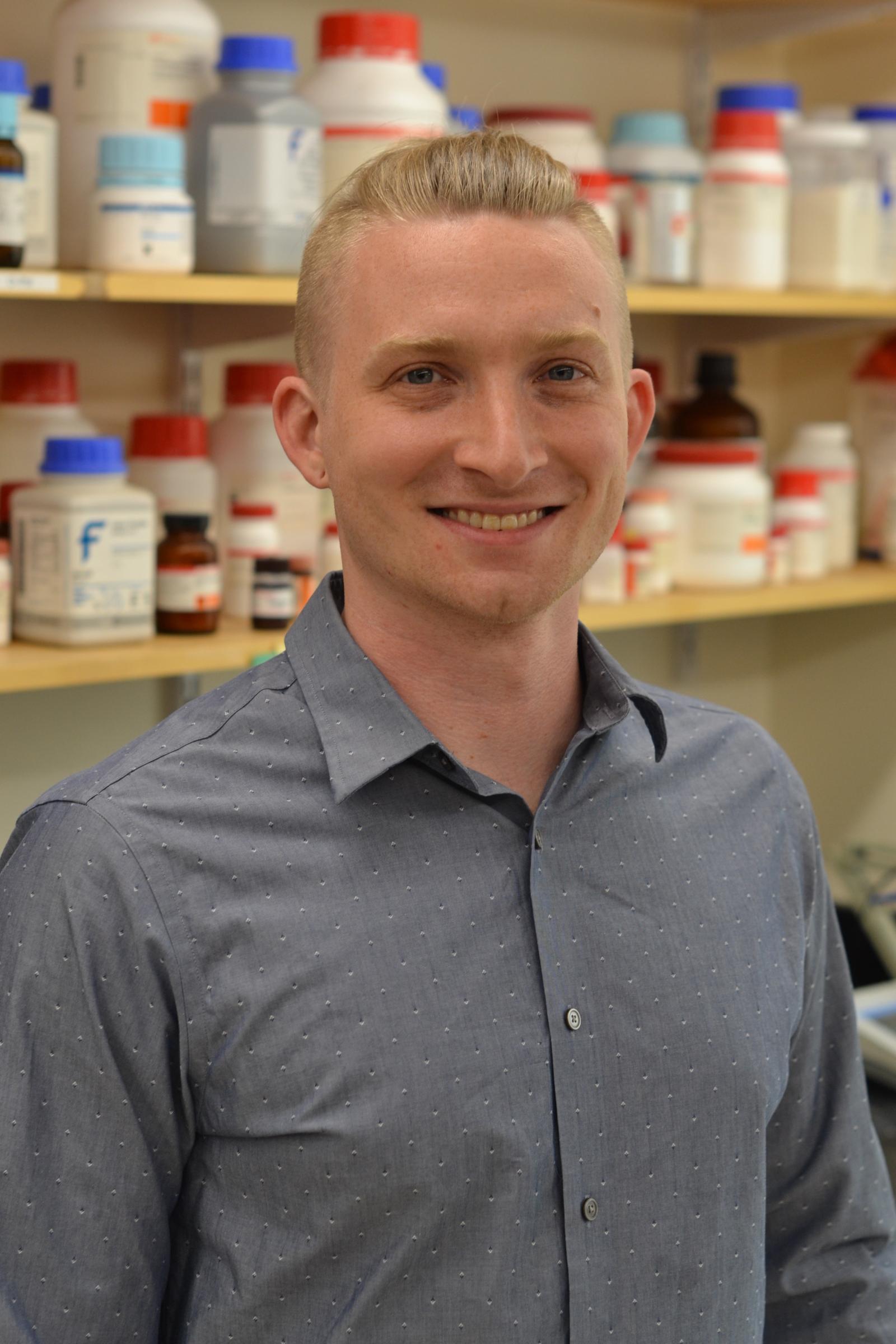
In orodigestive cancers, the team observed a very diverse polymicrobial and multi-kingdom microbial community. Anders comments, “The microbiome was even more diverse and more polymicrobial than we initially anticipated, including predominantly bacteria, but many samples also harboured fungi, archaea, viruses, and in some rare cases, the protozoan parasite Trichomonas.”
A surprising parasite enters the picture
The team found Trichomonas in a small portion of oropharyngeal and colorectal cancers, the first time the parasite has been associated with these tumour types. OPTIMISTICC investigators flag that this finding needs further validation in other large-scale datasets, but that it is indeed intriguing. Anders reflects, “One of the fascinating things for oropharyngeal cancer is that Trichomonas seemed to be present only in individuals with HPV-negative disease.”
Matthew Meyerson, OPTIMISTICC team lead, and lead author comments, “If this finding holds true, it would be really interesting to follow up and understand, is this a passenger? Is it potentially a disease co-factor? Could it be a driver? I think all of those are open possibilities at this point.”

A link between mutation load and microbial colonisation
Some of the variation the team saw in microbial composition and load was consistent with biogeography that you observe in healthy individuals, but some of it seemed to be very distinct to the cancer itself and the different cancer subtypes.
Microbial colonisation patterns associated with distinct genomic subtypes in gastric and colorectal cancer, which often harbour microsatellite instability and are hyper-mutated.
Anders explains, “Hyper-mutated cancers tended to be colonised at greater levels than non-hyper-mutated subtypes and also tended to harbour distinct microbial communities. This seemed to be more related to the mutation burden than the genomic subtype itself.”
Matthew comments, “It's really the depth and statistical power of the study and the quality of both the cancer genome analysis and the cancer microbiome analysis that allows us to really definitively identify this trend.”
Matthew continues, “It would be interesting to understand if there is any biological connection which might occur via the immune system.”
The team flags that in its analysis it did not find dramatic enrichment of the mutagenic pks+ E. coli. The mutational signature caused by the colibactin genotoxin produced by the pks operon has recently been associated with early-onset colorectal cancer cases, but pks+ E. coli is not found at high levels of enrichment in the tumours themselves.
Matthew emphasises, “We have no evidence that the tumour-associated microbiome is playing a role in mutagenesis.” This is in contrast to the colon-associated microbiome in precancerous stages where pks+ E. coli may be causing mutations. OPTIMISTICC’s findings are in agreement with results from team Mutographs, which hint that exposure may take place early in life.
Solid foundations for the future of tumour-microbiome research
OPTIMISTICC also found that the species of microbes seem to vary across cancer stages.
Anders comments, “Fusobacterium was one bacteria that appeared to be enriched in hypermutated subtypes at a very early stage, at stage one disease, whereas other microbes appeared to colonize at later stages. This suggests some sort of microbial succession throughout tumour development.” Again, the team is cautious and highlight the need for further validation.
The team hopes the stringent methods generated will allow the community to further dissect the myriad findings in this vast resource and call for continued transparency in reporting for microbiome studies to drive the field forward.
Matthew reflects, “We still need to untangle the interactions that these tumour-associated microorganisms are having with the tumour, if any at all.”
Read the paper, ‘Biodiversity and biogeography of the multi-kingdom cancer microbiome’ in Cell
Written by Rebecca Eccles with thanks to Anders Dohlman and Matthew Meyerson.