
CAUSE
Led by Ludmil Alexandrov, University of California San DiegoThe challenge
CAUSE is tackling the mechanisms driving mutational signatures challenge. By systematically characterising DNA adducts— chemical modifications that form when reactive molecules bind to DNA— and how they lead to mutations, the team aims to reveal where mutations come from. The team aims to provide the research community with cutting-edge tools, allowing to readily go from mutational signature, to adduct, to exposure and provide actionable insights for cancer prevention and treatment.
At a glance
CAUSE Is funded by



Team and leadership
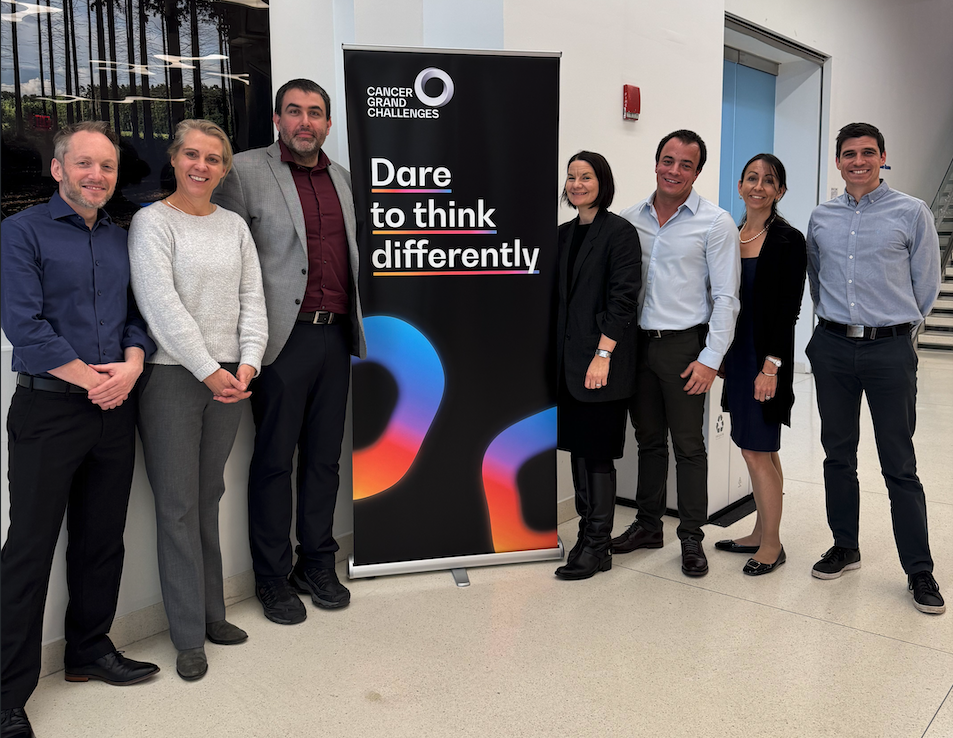
CAUSE is led by:
CAUSE brings together founders of the mutational signature field, who developed the AI tools to identify these signatures, and provided the first catalogues of mutational signatures in both cancerous and normal tissue. They are joined by innovative chemists, pioneering technology developers and experts in DNA damage and repair.
Tackling the mechanisms driving mutational signatures challenge
The CAUSE team aims to uncover the molecular origins and mechanisms of unexplained mutational signatures in cancer by systematically identifying and characterising DNA adducts to understand the process by which an insult leaves a mutational signature on DNA.
CAUSE will generate the first mechanistic atlas of DNA adducts and corresponding mutational signatures, focusing on three underlying mutagenic contexts - endogenous processes, geography-linked exposures (environmental) and chemotherapy-induced damage.
To do this the team will create a high-throughput platform that develops and integrates innovative chemistry approaches to allow unbiased DNA adductomics, with structural chemistry, single-molecule sequencing, genetic perturbation, and interpretable AI. This cutting-edge platform will enable the team to causally link transient and rare DNA lesions to stable mutational signatures.
CAUSE will draw on a broad suite of analytic, synthetic and computational chemistry methods to define the precise chemical structures of candidate DNA adducts, along with the reactive species and pathways that give rise to them.
Through highly sensitive, unbiased adductomics, the team will chart the landscape of DNA adducts in both normal and cancer tissues, enabling the discovery of rare but biologically significant lesions. They will also investigate how factors such as sequence context, chromatin accessibility and replication timing influence where DNA damage occurs and how it is processed—integrating chemical analysis with insights from genome architecture and DNA repair biology.
CAUSE will focus its efforts on colorectal, kidney, liver, gastric and oesophageal tissues— organs with unexplained signatures from both endogenous and environmental sources. The team hopes to unearth the causes behind prominent enigmatic signatures, one unique to Japan found in liver and kidney cancer, and one unique to South America found in colorectal cancer, which are likely due to environmental exposures.
Looking ahead
CAUSE hopes to shift mutational signature research from observational to actionable, allowing the field to determine associated exposures and mutational processes. The team’s workaims to create next-generation tools and transform our understanding of cancer aetiology. Critically, CAUSE aims to provide actionable insights for real world impact, potentially transforming cancer prevention.

Plain language summary
The challenge
DNA is like an instruction manual for our cells, telling them how to grow and function. But over time, DNA can be damaged by harmful substances in the environment (like pollution, tobacco smoke, or UV rays from the sun) as well as by natural mistakes that happen inside our bodies. This damage, called mutations, can sometimes lead to cancer. Each mutation leaves behind a unique pattern of DNA damage, known as a mutational signature.
These signatures act like forensic clues, helping scientists figure out what caused the DNA damage in the first place. Imagine an autograph on a piece of paper, if you don’t recognise the name, it’s just a scribble. But if you can identify the person who signed it, it tells you something important. In the same way, mutational signatures can reveal what has caused damage to our DNA. So far, scientists have identified different mutational signatures, but for many of them, we still don’t know what caused the damage. Without this knowledge, we can’t fully understand what triggers cancer, or how to prevent it.
This Cancer Grand Challenge aims to find the causes of cancer-driving mutations. This could lead to new ways to prevent cancer, such as public health policies that reduce exposure to harmful substances. By identifying and limiting these risks, we could help prevent more people from developing cancer in the future.
CAUSE’s approach
The CAUSE team aims to create a cutting-edge technology platform to fill in the biological gaps between the autograph (the mutational signature) and its author (the source), thereby identifying the DNA adducts, or the pen in our analogy above.
The team plans to use its advanced technologies to identify and characterise DNA adducts (or DNA pieces) to understand the process by which insults – environmental exposures or processes happening inside our bodies – leave a mutational signature on DNA. Identifying all the possible pens that can sign autographs, and how they do it, will help to reveal who is the author. This really is a grand challenge, as like pens in the writing process, DNA adducts are also temporary – once the signature is written, they are gone.
CAUSE will focus its efforts on colorectal, kidney, liver, gastric and oesophageal tissues — organs with unexplained signatures. It hopes its approach will allow it to discover the causes behind prominent signatures, one unique to Japan found in liver and kidney cancer, and one unique to South America found in colorectal cancer, which are likely due to environmental exposures. This could provide actionable insights for real world impact, transforming cancer prevention and our understanding of how cancer starts.
The team’s work aims to also provide next-generation tools, both experimental methods and AI approaches, empowering the wider research community to determine the exposures causing mutational signatures.